latest News
NEW research - Shoes can make you weak and injured
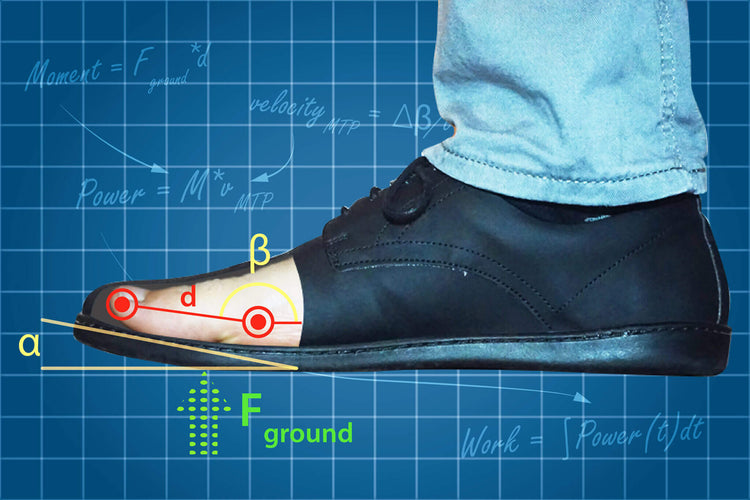
It's time for another episode of "stupid research."Not that the research itself is stupid.But that those of us who understand the value and benefits of natural movement, and how most "normal" shoes get in the way of letting your feet do what's natural, are stunned that people need research to prove something obvious:Using your body naturally is better than restricting it.In this episode, Harvard's Dr. Daniel Lieberman, whose research showing about how barefoot runners put less force through their joints than runners in shoes kicked off the barefoot running boom in 2009, just published a new study about footwear.And the results are not good for "normal" shoes.In this study published in Nature and described on the Harvard website and Lieberman and others examined the effect of "toe spring."Toe spring is the upward curve in a shoe, from the ball of the foot to the tip, that's built into modern athletic shoes and many dress shoes as well.Shoe designers add toe spring to stiff-soled shoes to accommodate the fact that the sole prevents your toes from bending towards your knee as your foot is about to push off the ground.So, what did they discover?In short:By limiting the amount of movement in the foot, the foot gets weaker: “It stands to reason that if the foot muscles have to do less work, then they’re probably going to have less endurance given that many thousands of times a day you push off on your toes,” said Lieberman, the Edwin M. Lerner II Professor of Biological Science and senior author on the paper. The work on toe springs is described in Scientific Reports. The researchers say this potential weakness could make people more susceptible to medical conditions like plantar fasciitis — a common, hard to repair, and painful inflammation of the thick, web-like band of tissue that connects the heel bone to the toes. And this limitation could lead to injuries and medical problems: The researchers say this potential weakness could make people more susceptible to medical conditions like plantar fasciitis — a common, hard to repair, and painful inflammation of the thick, web-like band of tissue that connects the heel bone to the toes. “One of the biggest problems in the world today of people’s feet is plantar fasciitis,” Lieberman said. “We think that what happens is that people are relying on their plantar fascia to do what muscles normally do. When you get weak muscles and the plantar fascia has to do more work, it’s not really evolved for that and so it gets inflamed.”

How to find TRULY comfortable shoes
The secret to finding comfortable shoes...It's probably not what you think.And it's definitely not what "Big Shoe" companies have been saying for the last 50 years.It's not because you need more arch support or better cushioning or to control your pronation or supination.The secret is actually what humans have been doing for ages.The secret to TRUE comfort is letting your feet do what's NATURAL.Think about this -- did you know 1/4 of the bones and joints of your ENTIRE body are in your feet and ankles?Did you know you have more nerve endings in your soles than anywhere but your fingertips or lips?CLEARLY, you're supposed to USE those things at the end of your legs.Your feet are made to bend and flex and move and FEEL the world (you'll want to do that safely, and I'll show you how).And it gets worse >> When your feet can't do their job, that function of helping you move and balance tries - UNSUCCESSFULLY -- to move "upstream" into your ankle, your knee, your hip, and your back.You want to let your feet do their job, so the rest of your body can do its job.But most shoes do the opposite of what's natural -- they squeeze your toes together, they elevate your heel (which messes with your posture), they insulate you from the ground so your brain can't tell what's going on with your feet (which means it doesn't have the info it needs to help you move your body efficiently and enjoyably).And NO amount of cushioning protects you from the impact of walking or running, or even just standing.ANOTHER QUESTION -- Remember being a kid on a warm summer day and going outside, kicking off your shoes, and feeling the grass between your toes, or the sand under your feet, or the water around your ankles?Remember how much fun it was to PLAY... until it got so dark your parents had to drag you home, even though you couldn't see your hand in front of your face or the ball you were trying to kick or hit?You can have that feeling of fun and freedom NOW... at any age.It comes from letting your feet do what's natural.Now, I'm NOT suggesting you run around barefoot like some aging hippy (I know that's what I look like, but my wife said she'd leave me if I cut my hair!)Once my wife and I discovered the fun and the benefits of natural movement, we started Xero Shoes to make footwear that LETS YOUR FEET BE FEET: - Natural Fit -- wide toe boxes let your toes spread and relax. A non-elevated (zero-drop) heel for proper posture. - Natural Motion -- super flexible to let your feet bend and move naturally. Low-to-the-ground for balance and agility. - Natural Feel -- the patented FeelTrue® soles give you just-right protection while still giving the ground feedback your brain needs for efficient, natural movement. All our casual and performance shoes, boots and sandals are super lightweight. They're made for almost any activity you do -- walk, run, hike, workout, do yoga or CrossFit, or even just stand on your feet all day for work.They're so comfortable that at the end of the day you may forget to take them off!We've had people email us to say, "I got into bed and then realized I was still wearing my Xero Shoes!"Plus they're affordable and so durable that they have a 5,000 mile sole warranty.Oh, and yes, we WERE on Shark Tank ;-)We've helped hundreds of thousands of people discover the fun, comfort, and benefits of natural movement and we hope you decide to do the same.Go to https://thexeroshoessale.com/shop/ to see which styles have your name on them. Check out the reviews (over 17,353 5-star reviews!), and get ready to Live Life Feet First!(And if you have any questions, our Customer Happiness Team is available to help -- 303.447.3100 or support@thexeroshoessale.com)

Spot Xero Shoes During Your Next Safari!
Introducing the Front Runner, the first shoe designed to improve the health and performance of rehabilitating cheetahs.The design idea came from New York City Zoologist, Dr. Lex Rodriguez, after noticing that when cheetahs were released back into the wild, the paws of these magnificent cats were not able to handle sticker burrs, hot gravel, sharp rocks, and even the friction they develop by running at over 60 miles per hour.Says Dr. Rodriguez, "I've worn Xero Shoes for years and it occurred to me that the protection, and ground feel you get from these shoes, could be effective for helping these animals transition back to their natural habitat.When he was approached for this project, Xero Shoes CEO was instantly interested."I've been a competitive sprinter since I was a kid," says Sashen. "So it's not surprising that cheetahs are my favorite animal."The Xero Shoes team took their top-selling running shoe, the HFS, and quickly adapted it for feline feet.Both Xero and Dr. Rodriguez were initially skeptical about how the animals would adapt to wearing footwear."We've all seen how domestic cats behave when they step on tape," Sashen said. "They walk around trying to shake it off. We thought the big cats might react the same way."Dr. Rodriquez was more than pleasantly surprised by the initial results. “It’s amazing. They adapted almost instantly. It’s like they don’t even notice or feel anything different, but their performance tells a different story.”Over the last 7 months, the Front Runner was tested on 3 cheetahs of different ages that were preparing for reintegration back into the wild.Reports Dr. Rodriguez, "Wearing the shoes prevented their pads from becoming raw, so they were able to run longer, but they still have the same excellent balance and agility, and their toes can still flex and bend naturally."Most surprising, the cheetahs increased their top speeds by 6%.The zoological research team is still investigating how the performance improvement happens, but the current theory is that the dual-chevron tread gives great traction, without the energy loss that occurs when claws have to dig into the ground.Xero made one significant change between the running shoes they sell online—the Prio, Speed Force, and HFS—they added "Prey Slots" in the FeelTrue rubber soles to allow the cheetah's claws to work naturally when the animal catches prey."There's no value being faster," says Dr. Rodriguez, "if, once you catch up to your prey, you can't, well, finish the job."With just the right amount of protection, the Front Runner should enhance the cheetah's ability to effectively hunt no matter what the elements, keeping the population of prey animals in check and ultimately—helping plant-life by preventing overgrazing.Based on these results, Xero has been approached to develop performance-enhancing footwear for other animals, speedsters and otherwise, including those raised in the wild.Says Sashen, furtively, "I'm not supposed to talk about our 'skunkworks' projects, but we're working on shoes for ostriches, orangutans, and ferrets." Preliminary results are expected by this same date next year.
How to Perfect Your Balance
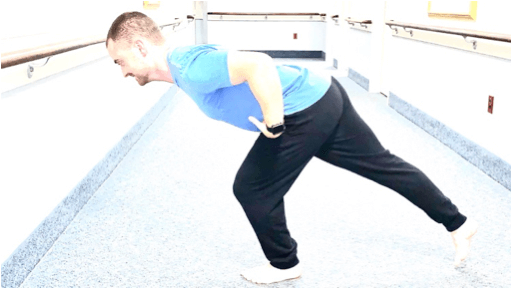
Have you always thought that you just aren't someone with good balance and that's that? Think again. It is totally possible to improve your balance! So how do you do it? Just like a weightlifter needs to lift progressively heavier weights to get stronger, if you want to improve your balance, you need to challenge your balance by placing yourself in unstable positions. In doing so, your body will develop the reflexes needed to maintain balance in that unstable state. This means that you need to be doing exercises that make you wobble...for if you are not wobbling, you are not being challenged. In time, a given activity that once made you wobble, will soon become easy and so you will need to move on to a more difficult activity.Safety first: If you’re concerned that you might fall during a balance exercise, always keep your hand close to some type of support like a sink, counter, or sturdy chair. However, when performing the exercises, you should keep your hands just above your security support and only use them when you feel like you may fall. By having your hands just above the support, you will not rely on your hands to steady yourself and instead will use the balance reflexes found in your feet, legs, and torso. So, let's begin. For an extensive list of balance exercises I regularly use as a physical therapist for patients, head to https://programs.perfectingmovement.net/catalogIf those exercises are either too easy or too difficult for you, all balance exercises can be made more difficult by reducing the amount of visual input you are receiving. This can be done by performing the activity in a darkened room, with eyes squinted, or with eyes closed. In this way, it will limit the amount of visual input your brain receives and so will force you to rely more on your other systems for sensory input.Exercises can also be progressed/modified by standing on an unstable surface such as a foam pad, BOSU ball, wobble board or even a slack line, all of which of course will make you wobble more. As always, anytime you are wobbling, you are challenging yourself and are actively in the process of making your balance better!In this program, I have balance exercises for people of all ages ranging from high-level athletes to geriatrics.So, are balance exercises for athletes too??Absah-freakin-lutely...having good balance as an athlete is crucial toward preventing injuries. This is because good balance is essentially having good neuromuscular control. Without good neuromuscular control, one loses control during movement, and so is at a much higher risk of getting injured. Think about it: Running, cutting, sprinting, braking: all of this happens on one leg at a time. Therefore it is essential to have good neuromuscular control on one leg; ie good balance. Squats and deadlifts are great exercises, but they won’t improve your control/balance on one leg needed for activities like sprinting, cutting, running, and pivoting. Therefore, awesome single balance = not getting hurt = being a real winner.Footwear which can immediately create better balance:When using a thinner, flatter shoe with a wide toe box, one typically has better balance. This type of footwear is called “minimalist”, or “barefoot” footwear. Xero Shoes are definitely my preferred minimalist shoe brand.Here are some of the characteristics and benefits of a minimalist footwear: A wide toe box which allows the toes to splay, creating a wider base of support. A flat sole without support which does not throw off the natural positioning of the foot and ankle. A thin sole which places one’s center of gravity lower to the ground to create improved stability. A thin sole which also allows one to feel the ground more easily. In this way the brain has faster and more descript sensory input needed to create more rapid and effective balance reflexes. In contrast, most traditional shoes have thicker soles, motion limiting “support”, narrow toe boxes, and elevated heels. All of this will disrupt the body’s natural sensory and reactive needed to maintain balance.As a physical therapist, I have had AMAZING success in getting my patients in a minimalist footwear for both reducing pain and improving balance. Once my patients start using minimalist footwear, it is extremely common that they report feeling more balanced and more confident on their feet.Lastly, it is essential that one learns how to walk with proper technique in order to prevent a loss of balance, slip, or a rolling of the ankle. This is because walking with good technique places the foot more beneath the center of mass so that you have better control. Often people take an excessively long stride where the foot is too far forward from the center of mass. The further the foot is away, the less control you have and so are at higher risk of injury. As a guy who used to constantly sprain his ankle, I no longer do so. What changed? I almost exclusively use minimalist shoes and have improved my walking and running techniques. Here is a great video resource to learn how to walk the right way from PerfectingMovement.Net.– James O’Brien MSPT, OCS, CSCS, from PerfectingMovement.netThe content of this post does not constitute and is not intended to be a substitute for professional medical advice, diagnosis or treatment. Always seek the advice of a physician or other qualified health provider with any questions or concerns you may have about your health or a medical condition.