latest News

Meet Xero Shoes' Customer Happiness Team
Do you ever wonder who the people are behind Xero Shoes' Customer Happiness Team? Whether you need help picking your favorite Xero Shoe to buy, or you’re looking for your order, our Customer Happiness Team is the front line between our customers and the rest of our team. We have team members that have been here for more than 4 years! They have extensive knowledge about each of our shoes, not only from talking with thousands of Xero customers, but because they’re regularly talking with the product designers and of course, wearing the shoes in their daily life. Most importantly, Xero Shoes Customer Happiness Team does everything with a smile on their face. Their goal is to be as helpful as they can to help you find your new favorite Xero shoe. To get to know the team better, we asked them a few questions… What's the most popular question you get asked by our Xero Shoes’ customers? Customers often want to know if these shoes can really help their feet feel better. – Kelly I find customers often ask about women’s to men’s sizing conversions! – Leevi Are you the guy from the commercial?! – Ross Recently, customers have asked what shoes are best for Pickleball? – Savannah Do you actually wear these shoes? – Amber How do I exchange the shoes? Because it takes about 3 seconds to reply and it makes me feel productive :) – Jan The most common question is probably how fast can I get my shoes! – Caitlin They ask what style would be best for what activity? We have a ton of styles and some may be better for certain activities, compared to others. I enjoy helping people get that figured out! – Garrett What’s your favorite Xero shoe and why? I'm really digging the Ashland, they are like slippers on my feet! – Ariel The HFS by far, because it's the most comfortable in my opinion. Flexible, thin, and fits like a sock. – Kylee The Speed Force and HFS! They're both incredibly lightweight and if I am looking for a closer to the ground feel, the Speed Force is my go to. – Garrett I love the Zelen because it's light weight, breathable, and my new favorite workout shoe. – Leevi The HFS! It's easily the most comfortable shoe I've ever had. – Caitlin The Denver, I dig its style and warmth in the winter. – Ross I have many favorites but I will always default to my well-worn and loved Hana shoes! – Kelly HFS, no question. The best shoe I have ever owned. It made me rediscover running. – Jan What do you do outside of work? Share some of your favorite hobbies or activities! I like to do all sorts of things, hang out with my dogs, family, love eating food, and watching scary movies. – Ariel Outside of work I love to spend time hiking, traveling, doing Yoga, or reading! – Caitlin Outside of work, I like to go on outdoor adventures, take a scenic drive, do anything water-related, and most of all, spending time with the people I love. When you have the right people, doing nothing can be everything. :) – Leevi Gyming, hiking, taking day trips and spending time with loved ones. – Savannah When I am not working, I enjoy the normal things in life with my boyfriend and fur babies (two Boston Terriers, Bruno who is 12, and Moxley who is 2). We spend time in the outdoors, cooking/baking, painting, listening to music, watching professional wrestling, watching movies (mostly ones from the 80s and 90s), watching drag/professional car racing, road trips, etc. Fly-fishing, camping, and Krav Maga. – Ross Hiking, dog sledding, lifting weight, reading books, and an occasional beer at a brewery with my dogs. – Kylee I go to a lot of concerts, play music and disc golf, plus go hiking and see new places! – Garrett When I’m not at work, I love spending time with my husband and family. I also love to bake! – Kelly I love to get out climbing, mountain-biking, running, XC skiing. I enjoy editation and a good cup of coffee. – Jan Any surprising or fun customer service stories? I did have one customer ask me for the office address to send flowers as a thank you for helping them. Definitely wasn't expecting that! – Caitlin It’s always very satisfying to hear from an apprehensive customer who took a chance with a pair Xero shoes and found that they were amazingly life changing! I’ve heard from many customers in this situation that they have their mobility back because of their Xero shoes and are ‘customers for life’! – Kelly

Customer's Favorite Xero Shoes to Pack for Travel
Whether you’re heading to the mountains for a hike, escaping to a faraway beach or exploring a city on your bucket list, you need a travel-friendly shoe that’s versatile and comfortable, no matter where the day takes you. And due to their minimalist design, Xero Shoes are so lightweight they can bend in half, making them easily packable in even the smallest luggage, saving precious weight. Instead of packing multiple shoes for every activity, reviewers boast that these travel-friendly Xero Shoes are the only ones they pack on a trip! Best Xero Shoes to Pack for Travel For a shoe that you'll use not just for all the city exploring on vacation or walking during airport travel days, but when you want to sneak in a workout. The HFS is an all-around favorite that's much more lightweight than other running shoes. We recently returned from a three week trip to France traipsing through airports, through the train station, climbing spiral stone steps up to the top of a castle and up the many, many steps Mount Saint Michel, tramping over numerous uneven cobblestone streets, over some rocky areas in Normandy, through vineyards, and through oak orchards following a truffle-hunting dog. Some days were a bit long with tours both in the morning and the afternoon. But through it all my feet felt wonderful; liked they’d been massaged all day! For the first time I’d never had the feeling of “I can’t wait to get back to the hotel or ship to kick my shoes off.” Even on the airplane, I didn’t take off my shoes - a first! All that traipsing around and my shoes hardly look like they’ve hardly been worn. -Diane O, "These are my travel shoes now. Perfect for runs and the gym, super comfortable on flights, great for walking and exploring. The black color blends in well enough to work for pretty much every situation, in my opinion. I wear them with jeans or dress pants... I just can't stand to wear any other shoes anymore..." - Daniel J . Want a comfortable, no-frills shoe that you can easily slip on and off? The Aptos Casual Hemp Canvas Shoe is a great pick for sightseeing or recovering from a day of active travel. “I am on a trip from Arizona to Helsinki Finland right now and can’t say enough good things about my new shoes! I stepped into my Aptos shoes and didn’t suffer the usual blister or rubbing that I have always had with a new pair of shoes. These are so comfortable and work so well for me. I can now travel without fear of damage to my sole lol.”Barb P. Just got back from a trip to Europe and a pair of black Hana's was all I took with me. Perfect walking shoe. Classy enough to dress up for some nicer dinners. Just comfortable all around. If you wanna save space in your bag, skip the sneakers and get a pair of these. And yup, these are my everyday shoes at home too! –David T. The TerraFlex II Hiking Shoe is an all-purpose hiking shoe for adventure travelers that fill their vacations with hiking, trail running and more! I wore these shoes every day during an extended 26 day work trip overseas…They are perfect travel shoes as they are light weight and easy to pack and most importantly, comfortable! The performance during the hikes was really impressive- great grip in some pretty steep and snowy situations. While city walking, I was happily surprised that they kept my feet dry even on rainy days when I was dodging puddles…. - Rhonda W. Walking in the City, Hiking on a Trail, Working out inside or outside; or out to dinner anywhere in the world, these shoes get you there, look good, feel good and you don't need to pack another pair of shoes. They have immediately taken pain out of my knees and tightness out of my shins. I know walk 6 miles every morning on the Broad Walk on Miami Beach in these. I bought a second pair because the colors all look so great. 58 Years old, 5'9, 200 and I feel i can move again like I was 15 years old. Will be walking up to Machu Picchu in these in 3 weeks. – Scott S. Hitting the beach or a tropical vacation and still want to get in your workouts? Whether you're beach running or creek crossing on your hike, the Aqua X Sport Water Shoe sheds water easily so you won't have to worry about wet feet. I traveled to Japan with these and they got me through days relaxing on the river, road runs in the pouring rain and a hike to the peak of Mt. FUJI. The hike up Mt. Fuji consisted of heavy rains, mud and Rocky trail and the Aqua X Sport performed better than I could have hoped. Thanks Xero! - Kirk B. If you're headed to a warm-weather destination, pack the Z-Trail EV Sandal, which can withstand hours of walking or paddling without any blisters. At just over 4 ounces, you'll barely realize they're in your luggage. “I bought these before a 2 week trip to Greece. I wore them the entire time and my feet were never sore. They were the perfect adventure travel shoe.” - Aaron O This sandal has been my day to day sandal used while travelling in Italy and it’s perfect for all types of activities. - Pascal P. Plus, several research studies tout that daily activity or just walking in minimal footwear strengthens feet. And if you’re headed out for a super long trip, Xero Shoes has a 5,000-mile sole warranty, even for our performance shoes. (For reference, most performance footwear only lasts 300-500 miles.) However, we want to say that any of Xero Shoes are great for travel!

Xero Shoes' Top 3 Minimal Boots for Cool Weather
Cooler weather is finally here and it's time to swap out your sandals for comfy, warm boots. Instead of turning to clunky boots that are hard to pack for fall travel or office wardrobe changes, or boots that pinch your toes together, Xero Shoes’ barefoot-inspired casual boots are designed with a wide toe box and minimal sole, allowing your feet to move, bend, and flex naturally. Who says you can't FEEL like you're barefoot after the summertime? Research shows that just walking in minimalist shoes strengthens foot muscles as much as doing a foot-strengthening exercise program. If you struggle with plantar fasciitis, bunions, or just uncomfortable feet, Xero Shoes’ lightweight, comfortable fall boots are a great pick! WOMEN'S LEATHER BOOTS FOR LOOKING STYLISH Tari Women’s Leather Boot The Tari is a minimal Chelsea-style boot for all occasions, made with sartorial detail. The full-grain leather upper feels as smooth as it looks, and tonal instep goring makes for easy on and off. The adjustable heel wrap helps stabilize your foot, and the flexible and durable FeelTrue® sole is lightweight at just 9.6 ounces each (W7). WOMEN'S COZY, FAUX FUR-LINED BOOTIES Ashland Women’s Faux-Shearling Boot Our Ashland bootie is a sustainably-sourced cool weather bootie that takes natural comfort to the next level. This bootie is made with a water-repellant hemp upper and a vegan-friendly, faux-shearling lining. Your feet will stay warm all day long in this boot, whether you’re hanging in the house or bopping around town. MEN'S HEMP STYLISH BOOT Denver Hemp Boot When there’s a chill in the air, you’ll love the comfort, style, and natural, barefoot feel of the Denver. This stylish ankle-high minimalist hemp boot offers a water-repellent canvas, cozy flannel lining and a heat-reflecting warming insole. And at only 12 ounces each for a men’s 9, you might stroll your way through the entire winter and forget you even have them on. Plus, be on the lookout for a MAJOR upgrade to our Denver later this Fall. WOMEN'S LACE-UP MID-HEIGHT BOOTS Mika Women’s Mid-Height Boot The Mika is a lightweight, lace-up hemp women’s mid-height boot that looks great dressed up or dressed down. This flexible, minimal mid-height boot features water-repellant canvas, perfect for the varying weather patterns in fall and winter. Stay warm thanks to a cozy flannel lining and stylish 70/30 poly/wool blend collar, and a heat-reflecting warming insole. Plus the lugged sole grips wet surfaces easily. WARMEST BOOTS FOR SNOW Alpine Snow Boot The Alpine is a snow-friendly, waterproof, lightweight insulated boot. Whether you're snowshoeing or relaxing apres ski, this snow boot keeps your feet warm, without all that bulk that traditional snow boots feel like. We designed this minimal snow boot with polyester insulation, a heat-reflective insole, and a fully seam-sealed lining.
How to Make Huaraches
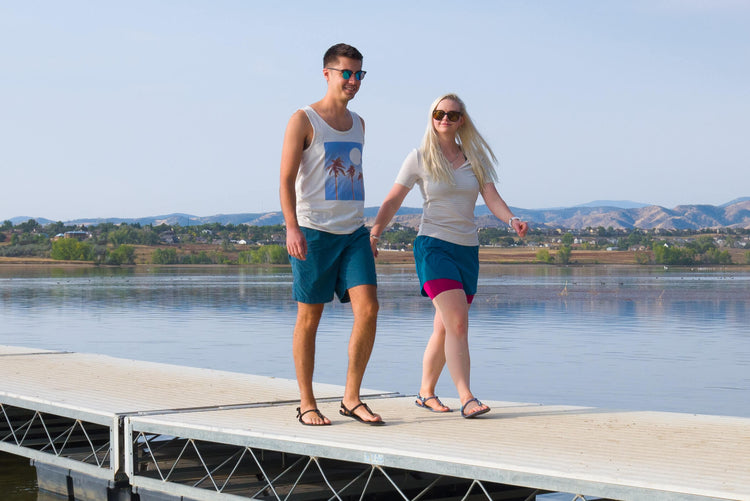
Ever since the publication of Christopher McDougall’s book, Born to Run, there has been an increased interest in the simple sandals worn by the Tarahumara, which he describes in his story. Called “huaraches,” the footwear of the Tarahumara are basic sandals created from the rubber tread of old tires and a bit of leather cord. Not to be confused with the fancy leather sandals that are also called huaraches, the sandals worn by this people group are the original minimalist running sandals. Members of the tribe are known to run incredible distances over rough terrain and gravel roads with nothing on their feet but these huarache sandals. Granted, the Tarahumara are not the first or only people to wear similar sandals. In fact, the oldest archeological find of a shoe is many thousands of years old, was found in Fort Rock, Oregon and looks quite familiar. Now, If you’ve read Born to Run, or otherwise heard about huarache sandals, maybe you’ve been itching to get your hands on a pair of your own minimalist running sandals. There are two ways you can do so. For the less adventuresome, Xero Shoes has created barefoot sandals that recreate the minimalist experience of the original huarache sandals. Find yours here. For those who are up for the fun of taking on a fun do-it-yourself project, you can make your own sandals. These instructions will give you the details you need to create your own DIY huarache sandals from scratch using our Xero Shoes Classic Kit with Vibram rubber. Or you can make some sandals with the only outsole made specifically for barefoot running sandals (yes, you can wear them for other activities than running) – either the 4mm Connect or 6mm Contact kit with FeelTrue™ rubber outsoles. Click here for instructions. (Find out more about our FeelTrue™ products here.) And, at the end of the instructions about making huaraches, you’ll learn one way to tie huaraches. If you’re adventurous and creative, you can find other tying styles here. You can also download a PDF of the instructions, below, by clicking here. Things you’ll need to make huaraches: Some sort of sole material. Again, we made our FeelTrue rubber to be the best combination of strength, flexibility, and barefoot feel for DIY huaraches sole material. Another good option is the material in our Classic kit, the 4mm Vibram Cherry. Something to lace the sole to your feet — about 60-72″ per lace (depending on your size). You can use leather lace, hemp cord, etc. We use 5/32″ polyester cord… it’s soft, durable, colorful and provides the right amount of support (too thin can hurt, too thick gets unwieldy). Piece of paper and a marker (like a Sharpie) — to trace your foot. Pencil — to transfer your foot template to the sole material. Strong scissors — to cut your tracing and the sole material. Leather punch — to make the lacing holes in the sole (NOTE: We do not recommend using a nail or knife to make the hole. Holes made that way tend to tear). You want the holes to be the same size, or slightly smaller, than your cord. We use a 1/8″ punch for our 5/32″ cord (the hole is 1/32″ smaller that the cord). We use this Lace Hole Punch. Note: Depending on the material you use, you could try drilling a hole (some Xero Shoes customers have done this with the Vibram Cherry sole). Lighter or match — to seal the ends of the lace, if you’re using polyester, nylon, other woven synthetic lace material. Step-by-step instructions for making Huaraches: Step 1 – Trace your foot Step on a piece of paper. Lean forward and put a bit of pressure on your foot so it flattens a tiny bit. Then, using a marker (like a Sharpie) held vertically, trace around your foot. You don’t need to get every tiny nook and cranny, and you’re not trying to get an EXACT measurement of the sole of your foot… in fact, by holding the pen vertically, you’re making a trace that’s slightly bigger than your foot, and that’s exactly what you want. Step 2 – Even out the tracing You want to smooth out the curves. For example, you want to make the toe area into a curve, rather than bumps for each toe. Also, I extend the area on the inside of the big toe and the ball of the foot a little bit (sometimes when you run, your foot slips to the inside, so you want to add a bit of extra space here). Step 3 – Cut out the tracing Cut around the tracing. That is, cut on the outside of the line you’ve drawn, rather than ON the line. Again, that little extra bit can help make sure the finished product is comfy. Plus, you can always remove material from your huarache sandals and make them smaller, but you can’t make them bigger, so err on the side of too big. Step 4 – Check your other foot Take your cut out tracing, flip it over, and step on it with your other foot. If your other foot fits in the cutout, then you’ll use just this one template. If your other foot is significantly different (especially if it’s bigger), repeat steps 1-3 on your other foot. The beauty of making your own huarache sandals is that you can make them to fit your unique feet. Click this picture to see a video of Steps 1-4 How to make Xero Shoes Barefoot Sandals Step 5 – Transfer the pattern to the sole material Place the cutout pattern(s) onto your sole material and trace around it/them with a pencil. If you only have one cutout pattern, remember to flip it over otherwise you’ll end up making 2 soles for the same foot! Step 6 – Cut out the soles If you’re using the 4mm Vibram material that comes with the Xero Shoes DIY huarache kit, you can use strong scissors for this. You’ll have to make small cuts towards the back of the scissors and work your way around the material. Step 7 – Mark the toe hole Step on your soles and, using a marker (I use the Sharpie from Step 1), put a dot between your first and second toe, right where the webbing between your toes is, and slightly closer to the second toe than right in the middle of the space between the toes. The reason for this is, when you wear your sandals running, your foot will want to shift toward the inside. By putting the hole closer to the second toe, your foot stays in place better. NOTE: It’s much easier to have someone else make this and the next 2 marks while you just stand on the soles. Step 8 – Mark the inside ankle hole Still standing on the sole, place the pen vertically, just in front of your ankle bone, and make a mark on the sole at that point. Step 9 – Mark the outside ankle hole Still standing on the sole, you’ll notice that there’s a place where your foot makes less contact with the ground. Make a mark on the outside edge of the sole at that point. At this point, you should have marks for three holes. Step 10 – Punch the holes The size of the hole you make depends on the material you use for the laces. For example, when I use 3/16″ polypropelene/nylon for the laces, I make a 1/8″ hole. You’ll want to use a leather punch (I use either a rotary leather punch or the Lace Hole Punch we provide with Xero Shoes). NOTE: I do not recommend using a nail or knife to make the holes. Doing so can often leave a hole that’s not clean, leading to tearing the sole. Punch out the toe hole exactly on the mark you made. For the two ankle holes, punch a hole about 1/4″ in from the edge, in line with the marks you made in steps 8 and 9. Step 11 – Prepare the laces Depending on your lace material, you may need to prepare the ends in order to get them through the holes. For example, if you’re using leather, you may want to cut the ends of lace into a point. If you’re using polypropelene/nylon, heat the ends with a flame and carefully (so you don’t burn yourself) seal and shape the ends to be as pointy as possible. Step 12 – Thread the lace through the toe hole and secure it Push one end of the lace through the toe hole, from the top to the bottom. A traditional option is to make a knot in the lace, on the bottom side. I typically use a “Figure 8 knot”, pictured here. If you’re using polypropelene/nylon or polyester lace, you’ll want to run the flame from a lighter (or match) under the knot, to melt the nylon slightly, then press the knot together to seal it and flatten it a a bit. Lately, though, I’ve replaced the knot with a lower profile “Lace Bead.” Click this picture to see a video of Steps 5-13 How to make Xero Shoes Barefoot Sandals How to make Xero Shoes Barefoot Sandals Step 13 – Thread the ankle holes Pass the lace through the outside ankle hole first, from top to bottom. Then pass the lace through the inside ankle hole, also from top to bottom. Follow the pictures to get it correct… you want the lace to “lock in” around the holes. Click this picture to see a video of how to tie huaraches How to make Xero Shoes Barefoot Sandals Step 14 – Put your foot in and tie the huaraches There are 2 common ways to tie huaraches running sandals. One is the more traditional “toga-style.” And the other (which I learned from “kicksock” on the Google Barefoot Running group) is more stylish and allows you to slip the huarache on and off without retying. There’s no easy way to describe the tying methods, so follow the pictures/videos. Oh, and you may want to check out these new cool, decorative, and stylish ideas about how to tie huaraches and what to do with “leftover lace.” The “slip-on” method from a 1st person view: How to make Xero Shoes Barefoot Sandals Step 15 – Go out and ENJOY your new huaraches! Remember, though, to take it easy at first. If you’re not used to going barefoot, especially running barefoot, you’ll be putting more stress on your muscles and skin than you’re used to. Work your way into your huaraches slowly. And if you come up with cool, new tying ideas, put them on our Tying Page. Quick Questions and Answers I have found I often get a couple of questions when I’m talking about DIY huarache sandals. Maybe they’re your questions, too. Can you really run in huaraches? I get it. We’re used to running in shoes with thick soles and lots of padding. But yes, you can absolutely run in huaraches and I do all the time as do many tens of thousands of Xero Shoes customers. Remember, these aren’t flip flops. Unlike a casual sandal, huaraches fit snugly and securely to your feet. It is important to realize, however, that you are going to need to learn to run differently. One of the things Christopher McDougal talks about in his book (which I mentioned at the beginning of this post) is the relationship between footwear and running style. If you want to know more, I have written a post that tells you everything you need to know about how to run barefoot or in minimalist shoes like huaraches. I like the idea of minimalist footwear. Is there something with a bit more to protect my foot? After making your own DIY minimalist sandals, you may wonder if there are more minimalist shoe options out there. Absolutely. Huraches are associated with the barefoot style of walking or running that emphasizes minimal footwear that allows your feet to move and function naturally. Barefoot sandals, of which huaraches are an example, are just one type of footwear available. You can also wear barefoot shoes or even a pair of barefoot boots. Xero Shoes has models designed for running as well as walking & hiking. They are perfect for wet or cold weather or any time you just want a bit more coverage or protection. You can check out our entire collection here.
Xero Shoes Partners with Dignity Restoring Hope
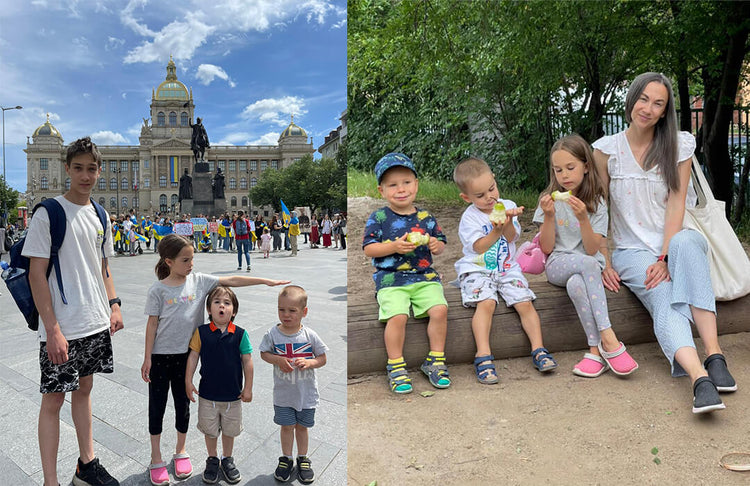
There's nothing worse than leaving your beloved home in pure fright. Through the Dignity Restoring Hope foundation, we were able to connect with Iryna and her young family of Ukrainian refugees.Introduce yourself, what is your name and how old are you? “My name is Iryna and I’m 30 years old.”Where are you from? “I'm from Kyiv.”What were you doing in Ukraine? “At that moment I was on maternity leave, we have 4 kids, and the youngest was 2 years old, right now he is 3 already.”Is all your family here in the Czech Republic? “Right now we come back to Kyiv. But later we are planning to go back to Prague. Right at this moment, my son has an operation on his leg. There are things we need to take care of and then we are arranging our return back to the Czech Republic.”Why have you decided to go to the Czech Republic, was it a deliberate choice? “It wasn’t a choice. That was all unexpected. We didn’t know where are we going and what to do, complete misunderstanding. But at that moment I was studying online and my classmate, who lives in Prague, called me on the 24th of February and invited us to come to her and offered to help. We were driving through different cities and finally decided to go to Prague. We wanted to stay for one week and see how the situation is going to change, to realize what is going on. We stayed for one month without registration, every day hoping that will end today, but there was no end in sight. Finally, after a month registered and got a visa for temporary residence”Were you leaving Kyiv the day it started? “Yes, we awoke by the sounds of the explosions. Packed some things in a suitcase, woke the children, jumped in the car, and went nowhere”What is the current situation in Kyiv? “The last days were quite tough. The air–raid alarms went off very often. Thank God, there were no explosions. A few days, after we came to the Czech Republic, we were watching the explosions from our window. This is scary, painful, and displeasing. But the days following all of Ukraine suffered from bombs. It is an intense situation, this is war.”How does your children react to a civil defense siren? “We were talking about that a lot, I was showing him a cartoon about the air–raid alarm. It is our friend, it notifies us about the threat of an attack and helps us. So now they are absolutely fine about it, say “Hi, alarm and thank you” because in the cartoon it is said to greet it and make your way to the shelter. They don’t have a fear. It is scary that they play games that you have to hide somewhere in the bunker, the flying shells. Luckily they didn’t see much of it but they know and understand everything from the information filed“Have you been to Europe before, to the Czech Republic? “ Yes, we were traveling before. More with the first kid. Then my daughter was born. And then we had another two kids, one year apart. With the oldest, we've been in the Czech Republic and Portugal. We've been traveling to Spain and Paris, but with one kid it was easier..”When you were traveling, have you ever thought about leaving Ukraine, to emigrate? “We had these thoughts when we were young, we were playing for a Green Card, but that was before we delivered our first baby. No action was taken for that. We had an idea to live somewhere for one winter, or 3 months, temporarily, this is interesting and changes your daily routine for a while. But apparently, once the war started, you realize that the only place you want to be is home.”Security is way more important, especially with the kids. “It is also about the choice. When you are choosing to leave. It is a conscious decision, your personal choice that is comfortable at this stage. But this is a totally different thing when you are running. First days we had a fear that we did something wrong, our actions can be against the law of this country. In Budapest, our money was stolen from our pockets. We were scared and lost anywhere.”Have you received help with documents here in the Czech Republic, people were willing to help? “We were waiting for a long time without registration and believed that it would end quickly. So after one month from the beginning, when we finally came there, everything was easy and fast. I've heard the stories before about how people were waiting all day, coming early in the morning to stand in line. But for us it was a very positive experience, people were nice, with open hearts, and did everything for us.”Was there a kind of negative situation, for example at kids' play yards, is there a difference in people's behavior, compared to the first weeks? “We had a negative experience on our way to the bank, the guy on the street was really aggressive and he was screaming that you are fascists. He was with a huge dog. I went to the bank and my husband stay in the car, and the stranger continued yelling. But my husband didn’t react to that, so he left. It is a catchy negative experience on the street that happened to us. We were spending almost all of the time in the play yards, and closer to summer more people from Ukraine came. Little conflicts I usually had with Ukrainian people, rather than with Czech. We went to the shopping mall, and there was a carousel with 3 horses. I was on the phone and didn’t get the whole situation. The lady put her daughter on it and turned it on, two of my kids saw it moving and also jumped on. The lady starts screaming this is only for her kid. Obviously, I took my kids off it. But the Czech moms act differently, they always say, common join, there are free spots, your kids can have a ride with mine. On the other hand, it is the difference in their attitude to their own things. When I come to the play yard, I simply pour out all the toys in the middle of the band, I don’t care who will take them, my kids share everything with the others. But when they tried to take a balance bike, the lady strictly notified me, that this is forbidden. We had a lot of different bikes and cars in Ukraine, and we were sharing them with everyone around, but we didn’t buy one in Prague, every day thinking that tomorrow we will go back home. But my kids are used to sharing and surprised that they can't take it. At the same time, i think this different attitude and vision might be right.”In general, do you like staying in the Czech Republic, and how long you are planning to be here? “By the end of the war, we really want to go home. This is not that the Czech Republic or Europe is bad, but we want to go home. We have a house here, I hope it will survive. We are here now, and you can’t imagine how much we were missing our city. We used to solve medical questions immediately, with stomatologists for example. My husband had a stomach ache and they offered an appointment three months later, or the nearest in another city in one month. We could manage this situation and we know that in Ukraine you can get the appointment on the same day. We love Kyiv. I believe our win is close. And we will all come back home”When are you planning to return back to Prague? Right now we have an operation for one kid, one of our kids is adopted, and we need to do a medical check for him, he has a condition of late growth, he is one year behind, and during the last year, we were working on this question a lot. He was in a hospital for a while, now he has a blood test. By the end of the week, we will have answers from doctors and in the middle of August, we are planning to come back to Prague. But it is not easy to find a place in Prague, we don’t want to go nowhere, firstly we will find a place to live, and then go.”Do you have relatives in Ukraine? All our relatives stayed in Ukraine. My husband's parents are from Mykolaiv. My h and my husband, we used to live there for a while. And every day you are reading from the news: bombed hotel - my cosmetologist was working here, an explosion in the city mall - I used to work here, destroyed university - my husband got an education there. That's terrible. The current situation in this city is a nightmare. Bombs every day, and for almost two months they don’t have drinking water. Two months ago they went to my mother in the Odesa region, and later, when we came to Kyiv, they came to us. This is horror. We are all together now, and i§m so happy, you never know, when is the last time we can see each other, and how long we won§t meet. For me, the importance of life and visions has changed a lot.”In general how much your life has changed? Do you feel safe, the ground disappeared below you, or points are a fulcrum? “On the first day, everything collapsed, utterly unknown. Early in the morning, it was still dark, we heard the sounds, I started throwing clothes into the suitcase, I caught myself thinking “for how long I packed, for a few days, or ф few weeks, or months, will I ever come back here, will my home survive will my home not be destroyed, will I have a place to come back.” The first month was the hardest. But after I went back to study. My academy is in Moscow, but I took a decision to quit it, even I was studying for 1,5 years, and left only one module and diploma, I couldn’t continue it. So I found another school, and after one month went back to study, it is really helpful and distracting. Housekeeping, studying, and taking care of kids there is no time for depression. I’m more flexible now and adjusting to changes is way easier. Sometimes you are at your emotional bottom. The last few week's news is full of stories from Mykolaiv and Vinnytsia. You are reading and feel like you are dying with these people. I allow myself this emotion, this is grief, this is pain from loss, but we are moving on. I have a motivation for myself to become better. They are trying to destroy us, but they can’t, instead of hatting them, I put my anger in the right direction I will grow, I will use this energy for self-development, we will be better, and we and our state become more beautiful. I will be a better person, opposite to them.”If you would like to donate directly to Dignity Restoring Hope, we encourage you to do so below. Donate To Dignity Restoring Hope Looking for more ways to help? We have put together a list of great foundations that are accepting donations for those in need.1. International Humanitarian Fund2. Children of Heroes 3. Fond Masha4. Voice of Children5. People in Need6. Unicef7. Doctors Without Borders
Family of 7 Hikes the CDT in Xero Shoes
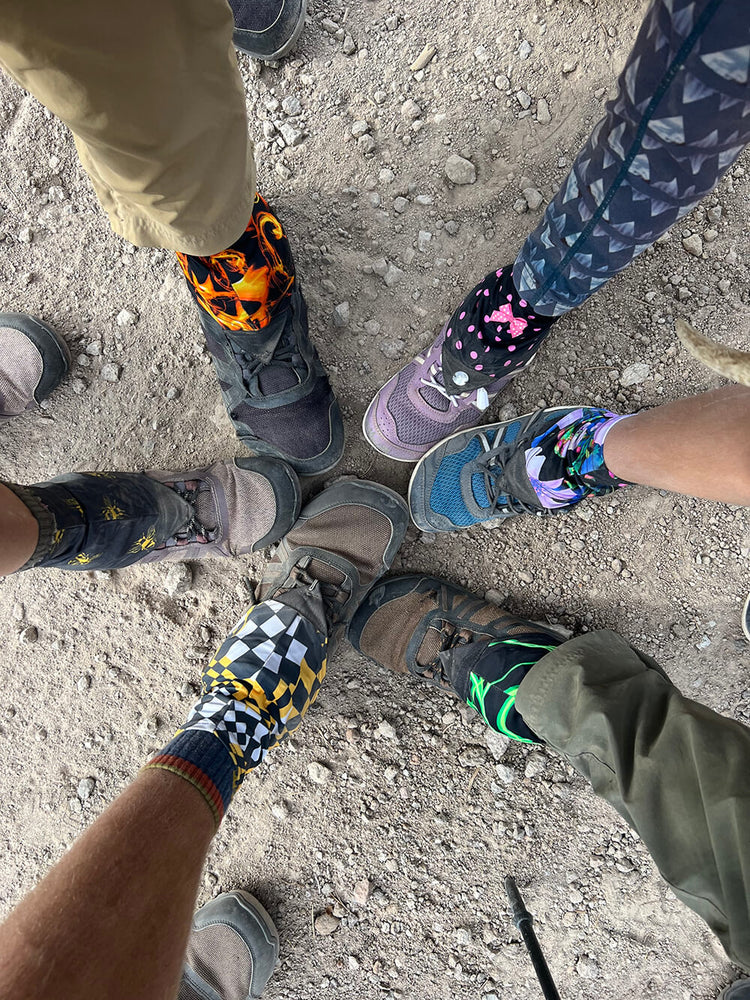
Imagine this: hiking the Continental Divide Trail which is over 3100 miles with FIVE KIDS and a newborn baby! The Netteburg Family is making their way along the CDT, and we are lucky enough to sponsor them in Xero Shoes the entire way. In 2020, the Netteburg Family trekked the Appalachian Trail and their daughter, trail name “The Beast,” became the youngest person to ever trek the entire trail on her own two legs, at age four. Her older siblings, Lyol (was age 11, “Blaze”), Zane (was age 8-9, “Boomerang”), and Addison (was 6-7, “Angel Wings”) also trekked without difficulty. They spent a total of 177 days on trail. If they successfully complete the CDT in 2022, “The Beast” will become the youngest to trek the trail at age six, and oh yeah, since the AT they have added another little addition to the family. So now with five kids, they will possibly be the largest family to complete the trail and the first to carry a baby the length of the trail (which has been done many times successfully on AT and PCT.) It’s been amazing watching their journey unfold through social media, and we got an update from the Netteburg Family at about 600 miles into the CDT: “Our Xero Shoes are holding up amazingly well, considering they are ultralight minimalist shoes and the abuse we are putting them under. Most trail runner shoes long-distance thru-hikers use end up beat up by 400-500 miles and these are surprisingly resilient. Also, we’re so pleased with how the zero drop and the minimalist design makes us more intentional when walking.” We weren’t lying when we told you about the 5,000 mile sole warranty. No matter what kind of abuse you are putting Xero Shoes through; they can handle it. When you’re hiking a long distance such as the CDT it’s not only important to have lightweight shoes on your feet, but also to pack lightweight. The Netteburg Family was smart enough to bring Xero Sandals with them as well. Here is what they had to say about their sandals: “The sandals are so comfy and handy around camp and around town. Much better than clunky crocs or flip flops. Xero sandals mean we can still wear socks around camp. Feet don’t freeze and feet are protected. The truth, however, is the boots are so comfortable, we hardly ever use our sandals around camp. Really only when we’re in towns.” Needless to say, Xero Shoes are so comfortable you just may never want to take them off. As we cheer on the Netteburg family throughout their ground-breaking journey, it is humbling to see how our shoes can help this family achieve their goals. After walking over 1000 miles in the DayLite Hikers, and the kids walking over 700 miles in the Prios it’s clear that our shoes are quality products that truly last. We’ll leave it off with sweet words from the Nettebur Family: “We love having a company that supports families getting outside and into the wild. From the youngest hiker to the parents, we are all happy with our minimalist shoes. They have held up amazingly well. This is our second long trail, so our family has definitely been through some shoes. Xero Shoes hold up every bit as well as heavier traditional hiking shoes.”
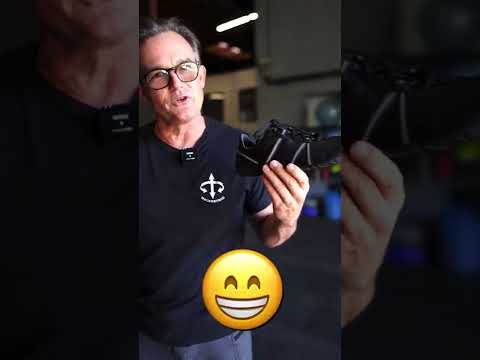
BOSU Ball creator's favorite Xero Shoe?
David Weck, developed the BOSU ball and is all about helping people maximize their health and performance.What shoe does David, and his team at weckmethod.com wear?Check out the video, below, for the answer to that question plus his great (and FAST) advice on how to make the transition from a "normal" shoe to a minimalist, lightweight shoe that lets your feet do what's natural.What can you do in the Speed Force?Well, it looks like almost anything according to this video:

Minimalist and Barefoot Shoes - a scientific overview
When I talk about natural movement and the footwear that does, or doesn't, support it, I'm often asked "Where's your proof?" In fact, if you look at the comments on many of the videos I've made that show how padded, stiff, thick, motion-control, elevated heel shoes with pointy toe boxes don't allow the foot to move naturally, you'll hear from people who agree that each of those characteristics can be bad. I've even had employees of "Big Shoe" companies concede that their products don't allow the foot to move the way, well, feet are meant to move. But then when I show how the design of a truly minimalist shoe, like Xero Shoes, can allow for natural movement which can be beneficial, some of those same people think I'm merely spouting an opinion and not synopsizing a LOT of research. So, if you're one of those people who wants "the proof," I can't think of a better starting point than this paper, published by the American College of Sports Medicine: Stepping Back to Minimal Footwear_Applications Across the Lifespan (clicking the link opens the paper in a new tab). Read the paper, of course, but if you want to have fun, look at the notes so you can see the amount of research that backs up the paper. And if you want to have REAL fun, search for and read the papers listed in the notes. I often call some of that research "The Dumbest Science Ever Done." I'm being deliberately tongue-in-cheek when I use that phrase, but I use it to get people to think about why those of us who promote natural movement need to do serious scientific research to demonstrate something as obvious as "use it or lose it." We all know that if you DON'T USE your muscles, ligaments, and tendons, you LOSE strength, flexibility, function. And, equally, we all know that the way you build strength, flexibility, balance, mobility, and agility is by USING your body. Anyway, enjoy the paper, and leave your thoughts about it in the comments, below...

Women's Oswego - Available ON SALE at REI and REI.com
While we update the Oswego for next season, we're out of stock at thexeroshoessale.comBUT you can find the Women's Oswego at some REI stores and REI.com...And they're ON SALE at 25% off!So head over to https://www.rei.com/product/177358/xero-shoes-oswego-shoes-womens to pick up a pair.Because they only have a limited number of pairs left, if you want a pair:a) Don't delayb) If you want to get them in-store, I'd recommend calling to see if your local store still has them in stock.

Strength Running Podcast: Are Minimalist Shoes For You?
Xero Shoes CEO Steven Sashen on the Promises of Minimalism Listen to this episode of the Strength Running Podcast and find out if Minimalist Shoes are for you. The host Jason Fitzgerald talks about the beginnings of Xero Shoes, the benefits of minimalism, how to transition, and more.Plus, find out what Jason thought of minimalist shoes...
New Research - Minimalist Shoes Improves Balance and Strength in Kids
I've said this before, and I'm going to say it again. It seems silly that in the natural movement and minimalist footwear world we need to prove something as obvious as "use it or lose it." Using your feet means letting them bend, flex, move and feel. "Losing" them means not letting them do those things.So when new research comes out (getting to that in a moment) that's all about use it or lose it, I can’t help but call it, ironically, “stupid research”. Stupid, because, do we really have to prove something as obvious as stupid as use it or lose it?This new research is from the University of Sydney, led by Dr. Shayan Quinlan. It discusses how shoes that allow for natural movement give children stronger feet with better muscle structure, and improve their balance as they grow. We can imagine this would also apply to adults. I have some more to say about the research in this video, below.There’s also an excerpt from an article on the study I think you’ll find particularly interesting…"Based on the study results the researchers recommend parents and carers look for a flexible shoe using the following pointers to identify the difference between available products.– Weight: the lighter the shoe, the better– Flexibility: ensure there is movement when you hold the toe and heel and rotate them in opposite directions and also try folding the shoe in on itself from toe to heel– Structure: the smaller the height difference from the heel to under the ball of the foot the better"While this research wasn't done for Xero Shoes, we can expect this would apply to them as well, since Xero Shoes check these boxes.You can find the study here and the article here, both by the University of Sydney.What’s your take? Comment below.

The evolution of human feet and how to have strong feet - BBC podcast
The BBC's Made of Stronger Stuff podcast just dropped an episode called "Feet." Overall... GREAT. It starts with the simplest idea, the arch in your foot is there to support your body. Spot on! Well, there are actually 3 arches in your foot, but they're referring to the one we normally think of -- the longitudinal arch -- when we use the term "arch." Next, it talks about the evolution of the foot and the arch... fascinating. From there it goes into more of what we know about the benefits of natural movement and barefoot running, much from Harvard's Dr. Daniel Lieberman's research, and from Christopher McDougall's book, Born To Run. And they debunk some myths, like, "pronation is bad." (It's a natural part of the spring-like mechanism in your leg.) They even use a phrase I coined when referring to "normal" shoes: Foot Coffins. So, I like that. :-) Then it gets into barefoot running and, overall, LOVE IT. But there are a few points I think they got wrong that I want to highlight: Suggesting that during the "barefoot running boom" which kicked off in 2009, injury rates "went through the roof." This isn't accurate. Aside from vague definitions of what constituted an injury (e.g. calf soreness isn't an injury), no study compared injury rates from new barefooters to new shod runners.They did make the point that you want to transition slowly to build foot muscle strength (and we know from Dr. Sarah Ridge's study, that merely walking in a minimalist shoe builds foot strength as much as doing a foot exercise program), which is great, but... They say that it takes “3 months, minimum” to build the requisite strength to run barefoot (or in a truly minimalist or barefoot shoe). This isn't accurate either. First, transition times vary, person to person. For some, it's just a week or two. For others, longer. Physical therapist, Jay Dicharry has said that the changes to the soft tissue, if you're someone who needs it, takes 6-8 weeks. In short, There's not one fixed amount of time, and 3+ months is, definitely on the long side. Secondly, transition time depends heavily on what you do TO transition. If you follow the instructions here, by starting SMALL, you can reduce that time greatly. This one's no big deal, but they imply that the Tarahumara are always barefoot. Actually, they spend more time in their tire-tread sandals, especially when running. On the other hand... This is the biggie that they got wrong -- when asked about picking "the best shoe", the advice is "Listen to your body. If it's comfortable, it's good for you."This is patently false if you're talking about a cushioned shoe.That shoe can FEEL great, but be BAD for you. Research shows that cushioning, which FEELS great, doesn't, well, cushion. Runners in highly cushioned shoes often put more force into their bodies and land harder on the ground (in part because their brains are trying to get some feedback from the ground, which the cushioning removes).Here's a brief physics lesson for you: "Pressure" is not the same as "Force." You can think of pressure as the total amount of "push", and force as the speed with which that "push" is applied. Well, cushioning can spread out the pressure, so your feet don't feel it as much, but it doesn't change the force. And since most runners in cushioned shoes land on their heel with a relatively straight leg, the force then bypasses their built in shock absorbers -- muscles, ligaments, tendons... and the ARCH -- and goes straight up into their joints. The flip side, of course, is that many people feel the comfort of Xero Shoes immediately, but for different reasons. Namely, the wider, foot-shaped toe box, the flexible sole that lets your feet move naturally, the non-elevated heel which doesn't alter your natural posture, and the fact that you can get ground feedback through the sole, which your brain needs to help you move most effectively and efficiently. Overall, though, the podcast is definitely worth a listen. It's only 35 minutes long... unless you listen to it at 2x speed, which I do ;-) If you check it out here, let me know what you think in the comments, below.