The Xero Blog

How to Strengthen Your Feet and Ankles for Hiking

How to Strengthen Your Feet and Ankles for Hiking

You can train your legs, lungs, and core for the mountains and still get sidelined by the one system that actually touches the ground: your feet and ankles. In this guide, NASM-certified personal trainer and Xero Shoes partner Mikey Bell of Outdoor Adventure Training shares why foot and ankle health matters so much to your longevity as a hiker, then walks you through 3 at-home tests and a simple framework for building the ankle mobility, stability, and load capacity that the trail demands. Why Feet and Ankles Matter on the Trail Most of us can get away with weak ankles in daily life. Cushioned shoes, flat, predictable pavement, sidewalks and office floors. There's no stimulus to respond to, no obstacles, and no brain-body connection being built. Each foot has 26 bones, 33 joints, and more than 100 muscles, tendons, and ligaments. All of it has to articulate and stabilize to move over uneven terrain. When those structures are undertrained, the load shifts up the chain to your knees, hips, and lower back. The good news: with the right approach, most of this is trainable. What Changes in Barefoot Trail Shoes Most of us have spent our lives in traditional footwear. Moving toward a barefoot shoe changes a few things at once. You get feedback again. Cushion lifts you off the ground. At the extreme, imagine walking on stilts: you lose proprioception, balance suffers, and you have no sense of what is underneath you. When you switch to a barefoot shoes,  your foot is finally feels sensory information again. Your foot gets to be foot-shaped. Toes are meant to spread when you load them, and that splay is a large part of your balance. Most shoes, hiking ones included, taper to a point and squeeze the toes together. Match the shoe to the shape of your foot, not your foot to the shape of the shoe. Your calves are going to work harder. Most street and workout shoes lift the heel, which shortens the calves and Achilles. If you've spent decades in a heel-lifted shoe, this adaptation isn't going to happen overnight. A gradual approach starts with addressing your weak link. Start by Finding Your Weak Link Before changing anything, find out where you stand. These 3 tests take about 15 minutes. Do them barefoot and cold, with no warm-up or rolling first, so you're seeing a true baseline. Log your results. Download and print our free Mountain Ankles Score Sheet before you start. It has the benchmark for each test and scores you at the end, so you'll know which one is your weak link. Follow along. Mikey walks through all 3 tests, start to finish. Test 1: Knee-to-Wall What it measures: ankle mobility. How to: Run a strip of tape out from the base of a wall and mark it at 1-inch intervals out to 6 inches. Half-kneel facing the wall, front foot flat on the tape, back knee down. Drive your front knee forward to touch the wall without your heel lifting. Move your foot back inch by inch. The farthest distance where your knee still touches with the heel grounded is your score. Coach's cue: your knee tracks straight over your 2nd and 3rd toe. Don't let it cave in or flare out. Log: left, right, and the difference. Test 2: Single-Leg Balance What it measures: stability and proprioception. How to: Stand on one foot, hands on hips, eyes open, and time how long you hold it. Then close your eyes, which is where most people find their limit. Run both legs, eyes open and eyes closed. Coach's cue: hands stay on your hips. The control should be coming from your foot and ankle. Log: 4 numbers, left and right, eyes open and eyes closed. Test 3: Single-Leg Heel Raise What it measures: calf capacity and endurance. How to: Stand on one leg. Rest your fingertips on a wall for balance only, and don't push through them. Rise as high as you can onto the ball of your foot, then lower slowly, under control. That's one rep. Go to failure, meaning the point where you can't hit full height with control. Count only clean, full-height reps. Coach's cue: slow and controlled, no bouncing. When your height starts dropping, you're done. Log: left and right. Now tally it up. Your Mountain Ankles Score Sheet turns those numbers into a score and points you at the weak link to work on first. What Builds Healthy Feet and Ankles The order matters. First you learn a new range of motion, then you learn to control that range, and only then do you add load to it. Jumping ahead without a stable foundation is usually where injuries happen. Mobility. Good ankle range of motion is crucial for the trail. It's what lets your knee travel forward over a planted foot on a climb, and what lets the feet and ankles absorb and articulate on the way down. It isn't the fix; it's a gateway that allows for meaningful work to happen. Stability. Stability is control. It's how well you can hold and articulate the ankle through the range you have, and it's what keeps you upright when the ground moves under you. Load capacity. What makes the mobility and stability hold up over a long day. Hiking alone probably isn't going to cut it. This needs to be intentional, focused work. Consistency. None of this works as an occasional big effort. Short and regular beats long and sporadic. The 15-minute version: a full follow-along session to build mountain ankles. Footwear "What shoes should I wear?" is one of the most frequent questions we get from our training community, and the honest answer is that it depends. On your goals, your training history, and what you've had on your feet for most of your life. If you're curious about barefoot shoes, this is a great place to start. Barefoot trail shoes offer real advantages to let feet move naturally, combining ground feel and proprioception. What to look for: Toe room so the foot can splay under load Flexibility so the sole bends with the foot instead of forcing it into one shape Ground feel so you can react to what's underneath you Secure fit with the heel locked and the toes still free Traction that grips on loose dirt and wet rock Enough protection for the terrain you're on. Match the footwear to the adventure Meet the Mesa Summit Speaking of protection, the most common tradeoff with barefoot trail shoes is too little protection: feeling every rock and root underfoot. That’s where Mesa Summit provides protection where it matters and freedom where it counts. A new ESS rock guard, the first from the brand, is embedded in high-impact zones and helps shield feet from rocks and roots without stiffening the ride. The updated abrasion- and debris-resistant polyester mesh upper, reinforced with a 3D-printed overlay, adds durability without compromising flexibility or lightweight comfort. For wet conditions, the Mesa Summit WP retains breathability with waterproof protection.  Start from the Ground Up Range you can't load isn't going to hold, and load without range just reinforces a bad position. You need all of it working together. Watch the Mountain Ankles series, run the 3 at-home tests, and start with whichever came back weakest. If you're moving toward a more barefoot-inspired shoe, explore the Mesa Summit as part of a gradual, trail-ready approach. The Mesa Summit combines the protection you need on technical terrain with the natural feel, flexibility, and ground connection that define our barefoot experience. These upgrades improve Xero Shoes’ popular Mesa Trail franchise. About the Expert With over a decade of experience as a NASM-certified personal trainer and professional mountain guide, Mikey blends his fitness expertise with firsthand knowledge from the field. As a Xero Shoes partner, Mikey advocates for barefoot-inspired footwear in the gym and on trail. Connect with Mikey: Website | YouTube | Instagram FAQ What do hikers usually misunderstand about foot and ankle preparation? That hiking is the training. Miles maintain what you have. They don't build what's missing. What are the top 3 movement checks before switching to barefoot trail shoes? Knee-to-wall, single-leg balance drills, and single-leg heel raises. What does ankle mobility actually change on climbs and descents? Climbing and descending both need the knee to travel forward over a planted foot. Without that range, the body will compensate. What's the difference between ankle stability and simply having "good balance"? Balance is a snapshot of one moment. Stability is whether you can control the joint through its range, under load, when the ground moves. What are the most useful exercises for uneven or technical terrain? Single-leg work of almost any kind, banded work, and controlled single-leg landings. How should someone new to barefoot shoes approach their first month? Think of it as the start of a long process rather than a one-month project. Start out with short, flat walks on easy ground, then gradually let volume build from there. How do footwear, training, and consistency work together? Your footwear is how you interact with the ground on every step. But the work that changes things happens when you're out of the shoes: the mobility, the recovery, the loading. Footwear helps the process along. Consistency is what makes it stick. What's one drill you'd give almost every hiker? Single-leg balance. On trail you're on one leg at a time. Getting comfortable there is what sets up every unilateral exercise after it, and that's the foundation of hiking. Stability first, always.  
Read More How to Strengthen Your Feet and Ankles for Hiking
How to Transition to Barefoot Shoes

How to Transition to Barefoot Shoes

A lot of people ask us two common questions: aren’t barefoot shoes uncomfortable and don’t I need to transition over time? Barefoot shoes feature a foot-shaped design, thin and flexible zero-drop sole, and minimal cushioning. They’re quite the opposite of traditional footwear. Why Barefoot Shoes Feel Different at First If you’re entirely new to barefoot shoes and come from wearing highly cushioned shoes, it’s definitely a new sensation. It feels different.  If you’ve ever been in a cast, the feeling when you take it off awakens the casted muscles because they haven't been used properly. The same goes for wearing barefoot shoes for the first time. You’re using stabilizer muscles and tendons that may not get regular use.  When you put less between your feet and the ground, those muscles and tendons start working again as they bend and flex.  Would you go to the gym, put 100 pounds on the bar and lift it over and over until you felt so tired you could barely move? Probably not.  Give Your Feet Time to Adapt Just as you would gradually increase your weight or volume the more you work out, you should gradually increase the amount of time you spend moving in your barefoot shoes. It’s common to feel a little sore, just like you would when you start a new workout regime. It’s important to know that transitioning to barefoot shoes can be different for everyone. Start small. Build gradually. Let your body adapt. Tips to Transition to Barefoot Shoes Start simple with short walks, quick errands, or everyday activities. Then you can build gradually over time, depending on how you feel. Increase your time in barefoot shoes and you’ll notice your body adapt.  A transition period is expected, especially if you’re new to zero-drop and barefoot shoes. If your feet or calves feel a little sore, that’s normal! Pain is not.  Most people adjust faster than they expect, especially for walking and everyday wear. If you’ve been wearing cushioned zero-drop shoes, the transition will likely be quicker as well. Start Small Walk around the block, aiming for just 5-10 minutes. Do your regular yard work (if it’s not too muddy/dirty to mess up your new shoes). Wear on your quick trip to the grocery store. Wear to the office if you have a desk job. Wear while making dinner in the kitchen, where you’re standing and moving around in a small space. Build Gradually Add 5 minutes to your walk every week. Wear for your walking commute or daily dog walk. Start wearing for low-impact strength training workouts like weight lifting. Wear for a short, non-technical hike. A Simple Barefoot Shoe Transition Plan Week 1: Wear them around the house, for short errands, or for a 5–10 minute walk. Week 2: Add a little more time if your body feels ready. Week 3 and beyond: Try longer walks or a hike, casual daily wear, or low-impact workouts. How Do I Know When to Increase Time?   Everyone’s transition will be different, because everyone’s feet are different. Start with short, easy sessions and build from there. If something keeps bothering you, scale back and give your body more time. Good signs:Your feet and calves feel fine, or any new sensation fades quickly. If you feel good, add a little more time/activity to your barefoot movement. Slow-down signs: Something feels painful or lingers longer than expected. If you notice lingering soreness, repeat the same amount of time before increasing. If that soreness sticks around, take a lighter day or skip a day. Once that soreness is mild or gone, you can increase.  First Barefoot Shoes: Top Picks Prio – a "do it all" sneaker Prio Coast – a hands-free slip-on sneaker Prio Neo – a versatile workout shoe Dillon – pick from knit, slip-on or leather options, depending on your style Z-Trail EV – if you’re looking for a sandal Common Mistakes When Transitioning to Barefoot Shoes Doing too much too soon. Switching every activity at once. Starting with running instead of walking. Ignoring how your body feels the next day. Assuming soreness means something is wrong. Build Foot Strength  As you’re adjusting to barefoot shoes, athletes in particular will find foot-strengthening exercises beneficial. Whether you're wearing training shoes or casual shoes, anyone can benefit from stronger feet. What are some of the easiest ways to start building foot strength?  Unlock your foot strength and wake up your feet with basic balance you can do any time.  Try these simple exercises.  Whether you play pickleball or not, this dynamic movement workout is a great place to start. Don't forget to stretch. The transition period isn't just about the shoes; it's about rebuilding foot strength that conventional footwear suppressed. Benefits of Transitioning to Barefoot Shoes The research on barefoot and minimalist footwear continues to grow. Barefoot shoes feel different because they let your feet move differently. With a wider toe box, a flexible sole, and a zero-drop design, they give you a more connected feel underfoot than many traditional shoes. For some people, that feels natural right away. For others, it takes a little time. That’s why the transition matters: you’re giving your body a chance to get used to a new way of moving. 1. Foot Strength Dr. Sara Ridge's research suggests that merely walking in a minimalist shoe for 8 weeks builds foot strength as much as doing a dedicated foot exercise program. 2. Better Ground Feel and Sensory Feedback Your feet have more than 200,000 nerve endings, making them one of the most sensitive areas of your body. That sensory input helps your brain understand where your body is in space (proprioception). With less cushioning underfoot, you can feel more of the ground beneath you. Many people like that connected, responsive feel. 3. More Room for Toes Most shoes taper inward, squeezing your toes together. Barefoot shoes give those toes more room to spread for natural movement with a wider toe box. 4. A Flatter Platform Underfoot Most shoes have an elevated heel, which shifts your center of mass forward. This forces the rest of your body to compensate through your ankles, knees, hips, and back.  Barefoot shoes are zero-drop, and can keep the body in a neutral alignment and keep the body weight centered over the feet. Learn more about barefoot shoes and posture. Do I Need to Transition to Hiking in Barefoot Shoes? Or can I just go for it? Hiking is often a natural next step after you're comfortable walking in barefoot shoes. In fact, the varied terrain and softer surfaces may feel even better to your feet.  If you’re feeling good just walking around, hit the trails!  Start with a familiar non-technical trail.  Flat or a mellow elevation profile is best, that way you can gauge how your feet and legs feel.  Add time first before distance since trails widely vary based on terrain. If you want to test out for backpacking or longer hikes, bring your regular hiking shoes in your pack and swap into them when your feet feel tired. The bonus is that barefoot hiking shoes feel light and flexible on your feet so they may be a welcome relief when you get to your campsite. The Scrambler collection features mid hiking boots or low hiking shoes, so they're a great place to start.  How Can I Transition to Run in Barefoot Shoes? Start even smaller if you want to run in barefoot shoes and aren’t used to minimal cushioning or zero-drop shoes. Proper running form is even more important because barefoot running shoes encourage a forefoot or midfoot strike rather than heel striking.  Start with walking first. Add short running intervals only after casual walking feels comfortable. Keep first runs very short. Don’t change shoes, distance, speed, and terrain all at once. Start on flat, familiar surfaces before trails or hills. You may only start with running 20 or 30 seconds. Your heart and lungs will adapt quickly, but your tendons and connective tissue need more time. Build up gradually and let your body set the pace. Looking for a great first barefoot running shoe? Try the HFS II. Read these tips to safely transition to running in barefoot shoes. Our goal is that Xero Shoes become your go-to shoes for all-day comfort, wherever the day takes you. The content of this post is for educational and informational purposes only and does not constitute and is not intended to be a substitute for professional medical advice, diagnosis or treatment. Always seek the advice of a physician or other qualified health provider with any questions or concerns you may have about your health or a medical condition.   
Read More How to Transition to Barefoot Shoes
One foot with shoe, one bare foot

Are Barefoot Shoes Good for Flat Feet or High Arches?

Have you ever thought: “I wish I could wear barefoot shoes, but I can’t. I need support.” Maybe you’ve wanted to try barefoot shoes, but you have flat feet or high arches and you’re worried they won’t give you enough support. It’s great that you’re thinking about how barefoot shoes would affect your overall foot health.   You may have been told that your feet need shoes to support, cushion and control your movement. But here’s another way to look at it: your feet are meant to move. Xero Shoes are built around natural movement: a roomy, foot-shaped toe box, zero-drop sole, flexible low-to-the-ground feel, and lightweight construction. The goal is not to “fix” feet overnight, but to let them bend, flex, and function more like feet. What Are Foot Arches? If you look carefully at a foot, you’ll see it has arch shapes running in more than one direction: front to back and side to side. When people talk about “flat feet” or “high arches,” they’re usually talking about the arch that runs lengthwise along the inside of your foot. This arch is not a rigid bridge. It’s flexible. It changes shape as you stand, walk, run, jump, lift, and move through life. Some people have lower arches. Some people have higher arches.  There’s no single “perfect” foot shape. There’s your foot, your movement, and what feels comfortable and natural for you. Flat Feet vs High Arches Flat feet generally means the inside arch of the foot sits lower to the ground. High arches generally means the inside arch sits higher and leaves less of the midfoot touching the ground. Plenty of people have lower or higher arches and never even notice.  Here’s a simple way to find out: Go outside to your driveway or another dry concrete surface. Wet your feet, then stand on the concrete for a few seconds. When you step away, you’ll see your footprint. Take a picture quickly before it disappears. A fuller footprint may suggest lower arches. A footprint with only a narrow strip connecting the heel and forefoot may suggest higher arches. This is not a diagnosis, but it can be a fun way to notice your foot shape. How Barefoot Shoes Works for Different Arch Types Traditional footwear is built around the idea that feet need support to function well. But that’s not the only way to think about shoes.  Flat feet and high arches are different, but both can be affected by traditional shoes that have a narrow toe box to restrict toe space, lift the heel, or have a stiff, cushioned sole that limits foot motion.  Barefoot shoes are designed to reduce those restrictions. Instead of adding structure that limits motion, it gives your foot more room and freedom inside the shoe. Xero Shoes are designed to reduce those restrictions with: A roomy, foot-shaped toe box so your toes have space to spread A zero-drop sole, meaning your heel and forefoot sit at the same height A flexible sole that lets your foot bend and move A low-to-the-ground feel so you can stay connected to the surface beneath you Lightweight construction that doesn’t make your feet feel boxed in Are Barefoot Shoes Better for Flat Feet or High Arches? Neither arch type is automatically “better” for barefoot shoes. The better question is whether the shoe allows comfortable, natural movement for your foot.  People with flat feet may find a flexible, zero-drop shoe may encourage the foot and lower leg to activate as you walk, train or move through your day. The low-to-the-ground feel can help feel more engaged and connected to the ground. Research suggests that foot strengthening can correct flat feet. If you have high arches, you may appreciate a shoe that does not squeeze your toes or force your foot into a narrow shape. A roomy toe box gives your toes space to spread, while a flexible sole allows your foot to bend and adjust as you move. The big shift is mindset. Instead of asking, “How much support can this shoe give me?” you might ask, “Does this shoe let my foot move comfortably?” For many Xero Shoes fans, that question changes everything. Our design philosophy is simple: let your feet move, bend, flex, and feel.  Key Takeaways Barefoot footwear may be comfortable for some people with flat feet or high arches, but results vary by individual. Look for a roomy toe box, zero-drop sole, flexibility, low-to-the-ground feel, and activity-appropriate traction. Transition gradually to give your feet, calves, and movement patterns time to adapt. Choose barefoot running shoes, hiking shoes, sandals, boots, or training shoes based on the surfaces and conditions you use most. Consult a qualified professional if you have pain, injury history, or medical foot concerns. Frequently Asked Questions Are barefoot shoes good for flat feet? Barefoot shoes may work well for some people with flat feet because they allow more natural foot motion and give the toes room to spread. The best approach is to start gradually and choose a shoe that feels comfortable for your foot and activity. Are barefoot shoes good for high arches? Some people with high arches like barefoot-inspired shoes because they are flexible, lightweight, and roomy in the toe box. A good fit matters most, especially if you are used to narrow or highly structured shoes. Should barefoot shoes have arch support? Traditional arch support is not the focus of barefoot-style design. The idea is to let the foot move and engage naturally, though some people may still need professional guidance or temporary support. What About Orthotics? Some people may want to start wearing orthotics with their barefoot shoes. Pairing orthotics with a flat, zero-drop shoe may work well because it’s a simpler base for the insert. Make sure the fit feels comfortable, your toes still have room, and the orthotic sits properly inside the shoe. If your orthotics were recommended by a professional, check with them before making a big footwear change. Conclusion Barefoot shoes can work for people with flat feet or high arches who want shoes that allow more natural movement. The best results usually come from choosing the right fit, matching the shoe to the activity, and transitioning patiently. Ready to try your own pair of barefoot shoes? Take this quiz to find your perfect pair here. The content of this post is for educational and informational purposes only and does not constitute and is not intended to be a substitute for professional medical advice, diagnosis or treatment. Always seek the advice of a physician or other qualified health provider with any questions or concerns you may have about your health or a medical condition.  This blog was updated on June 26, 2026.  
Read More Are Barefoot Shoes Good for Flat Feet or High Arches?

latest News

Placeholder Image - Xero Shoes

Can I run barefoot in the cold?

I've posted a few times about running barefoot in the cold (or in Xero Shoes)... check out this link, for example. But, inspired by a video I just received from Andreas Cederström in Sweden, I thought you would enjoy this: (Pardon the lag between video and audio... weird Google Hangout effect) You can find Andreas' video on the Xero Shoes Facebook Page So, yes, you can handle the cold if you: Warm up indoors first Adjust your running pattern -- rather than a 5 mile run, do some 1/2 mile loops (getting warm inside between each 1/2 mile and, as you get more acclimated, make slightly bigger loops) Be smart! There are no bonus points for running barefoot on the snow to the point of getting frostbite. Add some toe socks or thick wool socks and a layer of protection, like Xero Shoes. BE REALLY SMART! If you get too cold. STOP! Give yourself time to acclimate -- you'll definitely get better and better at handling the cold over time. SERIOUSLY, BE SMART!!!! (get the hint?) 32-degrees (Fahrenheit) is rarely a problem for me... but ZERO... that's a whole other story. "Dry" powdery snow is way easier to tolerate than wet snow. In other words, adjust to reality ;-) The content of this post does not constitute and is not intended to be a substitute for professional medical advice, diagnosis or treatment. Always seek the advice of a physician or other qualified health provider with any questions or concerns you may have about your health or a medical condition.

Leg length differences and barefoot running

Leg length differences and barefoot running

Can you run barefoot if your legs are different lengths?This is a question I get at least once a week. And I think the answer may be surprising.Watch this video that I made with Joshua Gordon about barefoot running technique and leg length issues (and a LOT more). Then leave a comment below with your thoughts.EnjoyThe content of this post does not constitute and is not intended to be a substitute for professional medical advice, diagnosis or treatment. Always seek the advice of a physician or other qualified health provider with any questions or concerns you may have about your health or a medical condition.

Running with the Tarahumara in Costa Rica

Running with the Tarahumara in Costa Rica

Want to run with the Tarahumara (the Mexican tribe featured in Chris McDougall's bestseller, Born to Run)? Well, if you can't make it to the Copper Canyon, or anywhere else for that matter, here's the next best thing. Ultra runners Jonathan Sinclair and Melissa Gosse went to Costa Rica for La Ruta 100k, arguably the hardest trail ultramarathon in the world. About a dozen Tarahumara runners were there and Jon and Mel got to spend the better part of a week hanging out and running with them -- as well as swapping huaraches and Xero Shoes, eating, drinking, and much more. They'll be sharing pictures and stories as well as giving great tips about barefoot running, minimalist running, ultramarathon training, and anything you can think to ask about. You can also click on this link to watch live video chat we had with them a few months ago.

Minimalist Running and Riding - the Xero Biathlon

Minimalist Running and Riding - the Xero Biathlon

Want to run a race, but there isn't one scheduled?Want to tackle a biathlon (running and bike riding), but there isn't one in your neighborhood?Want to run barefoot or in minimalist shoes, but tired of people yelling, "You can't do that!" at you?Getting too cold for racing in barefoot-style sandals?Well, Frank Jones and William Nichols solved all those problems: They made their own Xero Shoes race!Here's the report:Inaugural Xero Shoes Bialthlon a Resounding Successby Frank Jones, Bare Runners News Scott Air Force Base, IllinoisAs they made their way to the medal ceremony, the sheer joy of victory remained etched in their faces. William Nichols and Frank Jones had just finished first and second in the Inaugural Xero Shoes Biathlon, sponsored by BareRunners.The event, which took place today at Scott Air Force Base, Illinois, was the brainchild of BareRunners founder, William Nichols. “Southern Illinois is a great locale for a variety of races and athletic events,” he told this reporter. “The goal of today’s race was to highlight and emphasize the healthy running benefits of minimalist running” or “barerunning” as Nichols and his fellow barefoot enthusiasts like to call it. To participate in today’s run, competitors were required to wear Xero Shoes. “The BareRunners love these shoes, and we encourage others to ‘feel the world’ with us!”, Nichols said.The Xero Shoes Biathlon was held entirely indoors at the Scott AFB Fitness Center. It began with a grueling five-mile sprint on stationary bikes. From there, it was a quick transition upstairs for a tough three-mile dash…52 mind-numbing laps around the indoor track! Spectators stood in awe as the competitors completed this epic battle. In the end, Nichols pulled ahead of Jones for an overall first-place finish. “I may have finished first,” he said, “but we are all winners!”Jones, a retired USAF colonel, and today’s runner-up, praised the event sponsors: “I'd like to thank [them] for putting on a great event!” He also credited his training partner, William Nichols, “for training with me, for always keeping me motivated, and for encouraging me to step out of my comfort zone.”Scott AFB Exercise Physiologist, Mr. Al Bromley, credits Nichols and Jones for the blossoming minimalist movement at the air base. “I see these guys every day, and I’m amazed at what they accomplish in these Xero Shoes!” he exclaimed. Bromley has been a strong supporter of the BareRunners, offering support and advice as more and more athletes kick off their shoes and run barefoot or minimalist.Congrats to both William and Frank for an impressive race!Here are some more photos of the triumphant duo.   

How to Adjust the Xero Shoes Sandals for a Perfect Fit

How to Adjust the Xero Shoes Sandals for a Perfect Fit

To get a just-right fit for your sandals, follow the instructions below. And if you need more help, feel free to reach out to our Customer Happiness Team at 303.447.3100 or support@thexeroshoessale.com For all of our sandals, you want to aim for "snug but comfortable." Z-Trek, Z-Trail and Naboso sport sandals   Aqua Cloud and Genesis huarache-style thong sandals   Veracruz sandal   Shortening the laces on the Aqua Cloud and Genesis If you tighten your heel lacing and end up with "too much lace", you can shorten the laces by following these instructions:  
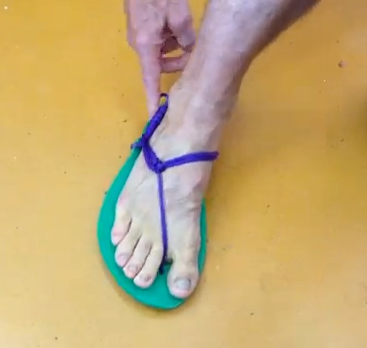
Pat's Xero Loop Barefoot Sandal tying style

Barefoot Pat's Xero Loop Variation

Pat made a tweak to the Xero Loop style that you may like. His video is in French (with a couple of English words tossed in, like "slip on" ;-) ) First, a few tying tips and notes: Tying the Lace knot: This is the knot we most commonly use, especially with our 100% polyester laces. The "Lace Bead": This is the smallest "knot" you can make for your Xero Shoes. Tying a Figure-8 knot: If you have our original laces with the nylon core, you'll want to use this knot. Lacing tips: The basic running sandal tying pattern Barefoot Pat's Xero Loop Variation Notice that he also found it more comfortable to move the toe hole forward about 1/4"-1/2". This shows how flexible the huarache concept is; find what's best for you and enjoy! Step-by-Step instructions coming soon!

Al Kavadlo working out in Xero Shoes

Fitness Guru Al Kavadlo chats with Xero Shoes

I met (online) Al Kavadlo over 3 years ago and was really impressed with what he was teaching and how well he practiced what he preached. Al has been a big fan of Xero Shoes, sending us photos of him running through the streets of New York, across the Brooklyn Bridge, and performing all manner of impressive bodyweight exercises in his Xeros. Al is a master of body weight training and has put together some of the best coaching I've seen on that topic... something that we both agree every runner could benefit from. We got together thanks to Google Hangouts to have a chat. We didn't have an agenda, and didn't prepare anything in advance, and I'm sure you'll enjoy watching this conversation with Al that includes: Strength training without equipment Best strengthening exercises for runners The link between barefoot running and bodyweight exercise Can you go barefoot in New York? REALLY? A new way to bring fun -- and fitness -- into your running ... and a lot more Let us know what you think in the comments below. And check out Al's fitness products: Pushing The Limits -- one of the best books on the essential bodyweight exercises I've ever seen. Great photos, and not just because so many of them feature Xero Shoes! Raising The Bar -- everything you can do with a pull-up bar (it's a LOT). If you're more visual, then check out the Raising the Bar DVD. Progressive Calisthenics Workshop -- based on the principles in Convict Conditioning, a classic in the bodyweight strength game.

Barefoot running on Youtube - A webinar with Jon and Mel

Barefoot running on Youtube - A webinar with Jon and Mel

Think you can't run an ultra-marathon? Well, think again.Maybe your limitations aren't what you imagine them to be.I just had a great chat with ultra-runners, Jonathan Sinclair and Melissa Gosse that I know you'll love, whether you ever plan to run an ultra or not.Watch the webinar and you'll learn: Do you need to do 100s of miles per week to train? What's the roll of cross-training? How much of distance running is physical vs. mental How do you deal with the mental challenges of ultra-running What diet Mel and Jon have found that helps with their training and recovery Why they run in Xero Shoes (and when they don't!) The value of barefoot running... at any distance ... and a LOT more Share what you think of this interview in your comments, below.

Get Xero Shoes for free (better than a coupon ;-) )

Get Xero Shoes for free (better than a coupon ;-) )

Even though Xero Shoes cost MUCH less than any similar product, especially with our 5,000 mile sole warranty, I know that for some people the price of Xero Shoes is more than they have. Well, here's a way you can get a pair for free ;-) Let us know how you do with this "magical technique." And if you know some other similar ways to get Xero Shoes, make a video and show us! ;-)

Men's Health Barefoot Running Stumbles

Men's Health Barefoot Running Article ... more of the same

The recent "Special Report" in Men's Health about barefoot running has inspired me to help you make a career change. You, too, can write an article about barefoot running that will appear in a major newpaper, magazine, or television show, if you do the following. Ten Steps to writing a popular barefoot running article Open with a headline suggesting that barefoot running is evil or dangerous. Ideally, use some pun about feet, or running that if the reader only saw the title, would suggest that there's no value in ever running in your bare feet.  Even if your article ultimately supports barefoot running, make sure the headline suggests that taking off your shoes could lead to injury, illness, and tax audits. Follow with a sub-headline that includes a "straw man argument" about the perils of not wearing $150 running shoes.A straw man argument is one where you introduce a position that nobody holds, or nobody of any import holds, and then attack that position. For example, I don't know of any barefoot running authors or coaches that say "You'll run faster in bare feet," so the straw man argument is to say that barefooters make that claim, and then attack that claim.  Similarly, a recent survey I did with barefoot coaches showed that none of us ever suggested that running bare footed was more efficient, yet many articles and even university research is now "debunking" a claim that was never made. Start with a story about someone who switched to barefoot running and got injured, and then claim that it was being barefoot that caused the injury. Ignore that 50% of runners and 80% of marathoners get injured every year. Conflate "minimalist" running with "barefoot running" and talk as if a zero-drop pair of shoes with 1" of foam is the same as running in your bare feet. Also, ignore that most "minimalist shoes" are about as minimalist as a pair of stilts. And forget that prior to 45 years ago, when the first running shoe was invented and sold, all shoes were minimalist. Quote doctors who say they're seeing more and more patients who are injured due to running barefoot. Make sure these doctors have never run barefoot in their lives. Ignore statistics: Doctors will see more patients with injuries when more people are trying something (doctors made the same claims 40 years ago when running shoes became popular and you can find articles saying that running is bad for you!). Doctors don't see patients who aren't having problems. Don't explore the doctor's statements too closely so you don't have to discover that these same doctors typically don't ask, "Are you running barefoot or in minimalist footwear," nor do they say, "Let's take a video and see if your running form could be a problem." Don't include any stories from the myriad people who've taken off their shoes, switched to barefoot, and been able to run pain-free for the first time in years. Definitely don't include stories from elderly people who have regained their balance once got out of orthopedic shoes and started using their feet again. Include some pro-barefoot info, but don't be TOO pro-barefoot. Keep the pro-barefoot info until later in the article so that if people stop reading they'll be left with the horror stories of running without motion controlled shoes. Ultimately, recommend minimalist shoes so that you don't anger footwear ad-buying companies. Suggest that switching to barefoot will be an arduous, massively time-consuming process that, maybe, will have some benefits... but probably not. To be fair, the Men's Health article is better than some. It does include some info about transitioning, even though it succumbs to the idea that you need to get a lot stronger, rather than focusing on using less effort/energy. And, I understand that if you want to sell magazines, television time, or eyeballs, it's helpful to be controversial. But there are ways to be controversial that inspire conversation and investigation, and ways to be controversial that encourages less thinking and reason. Even though, when considered in it's entirety, the Men's Health article isn't really anti-barefoot, I'm willing to bet that I'll get emails and calls from people who only read the anti-barefoot headline and first page and tell me, with a certain better-than-though feeling, "Well Men's Health said being barefoot is bad for you!"   The content of this post does not constitute and is not intended to be a substitute for professional medical advice, diagnosis or treatment. Always seek the advice of a physician or other qualified health provider with any questions or concerns you may have about your health or a medical condition.

Become your own barefoot running coach

Become your own barefoot running coach

I had an intense sprinting workout 2 days ago, followed by an even more intense weight lifting workout and this morning I can barely walk. Even more, I did a minor tweak of something in my ankle which I'm noticing as I walk on my treadmill (I have a treadmill desk). As I'm walking, I have to experiment and make minor changes to my gait in order to walk with proper form and pain free.This reminded me of an old joke:"Doctor, it hurts when I do this.""Well, stop doing that!"While this is an old joke, it's important barefoot running lesson, namely:If it hurts, STOP DOING THAT.Remove the following thought from your mindFor decades now we've been told things like "No pain, no gain" (I'm assuming you remember the running shoe company that first told you that).(BTW, I'm no conspiracy theorist, but if I sold a product that contributed to injuries the way that running shoes seem to, I can't think of a better way to convince people to use my product, despite the effects they may have been experiencing when using it.)But, back to the point... When it comes to barefoot running (and walking, and hiking, and anything else), the most important skill you can develop is the ability to be your own coach. And the most important coaching skill you can learn is to experiment with different movement patterns.When it comes to running barefoot, the odds are high that if you're doing something that hurts you're doing something incorrectly. And the way to make things stop hurting is to do something differently.Becoming your own barefoot running coachWhat are some of the kinds of hurts I'm talking about? Sore calves Sore Achilles (sore anything, really) Blisters Callouses Stubbed toes Abrasion between your toes, on top of your foot, or around your heel (if you're wearing huaraches). If you're wearing huaraches running sandals, there are some "injuries" to the sandals that "hurt", like: Wearing away the toe knot Breaking the toe strap above the knot Breaking the strap by the outside ankle hole All of these can be corrected by doing something differently, by changing your gait, or your thinking.What kind of changes are we talking about? Don't reach out with your foot (overstriding), but place your foot under your body as much as possible. For some people, you'll want to try to have your feet land behind you (you won't be able to, but the cue will move your feet further back). Barefoot Ken Bob has a great line: Move your torso forward and have your feet try to catch up. Another tip for doing something different than overstriding: pull your toes up towards your knees slightly, just before you land... some people overstride by reaching out with their toes. Don't push off the ground with your toes/calves, but LIFT your foot off the ground by flexing the hip. Don't think of your foot as something you "land" on, but as something that skims across the ground at the speed you're moving. Try a different surface -- smooth hard surfaces are the best for barefoot running because they give you the most feedback about your form. But if you're on a surface that hurts to run on, try a different one. Do shorter runs. Give yourself as much time as YOU need to learn proper barefoot technique. There's no magic number of days or weeks that it'll take. It's different for everyone. Start with short runs, really short runs... like 200 yards. Pick up your cadence. Move your feet faster, without running faster. Experiment with different speeds. Some people say you MUST run at 180 steps per minute. It's not true; that's not a magic number. But the odds are good that you'll want faster turnover than you're used to. In the cold, do "loops" instead of runs. Your body can handle cold better than you think, especially if, instead of doing one long run, you go out until your feet are cold, come back and warm up, and repeat. Try landing on your feet in different ways. You're not required to land on the ball of your foot. Midfoot might work better for you. Flat footed might work better. How you land when you're going uphill may be different than downhill. Fast may be different than slow. Many of these are overlapping. If you don't overstride, you won't have to pull your foot toward you. If you speed up your cadence, it's harder to overstride and harder to use your calves too much.Do the mathMany of the problems described above are related to these equations:Excessive friction causes abrasion. Abrasion causes blisters or lace wear. Excessive friction is unnecessary for running barefoot.Using muscles more than necessary causes soreness. You can run barefoot with less muscle tension than you think.If you look at the feet of accomplished barefoot runners, you won't find blisters or callouses. If you look at the bottoms of the sandals of accomplished barefoot sandal wearing runners, you'll find no abrasion on the toe knot or the ankle hole areas.If you tested barefoot runners for calf strength, they're typically not any stronger than the average non-barefoot runner.Did I mention: Have Fun!Perhaps this is the most important coaching tip you can give yourselfIf you're not having fun, do something different until you are! Run like a 3 year old for a while: let your head lead you, let your arms flail, run in circles and sweeping arcs, make noise!I often have this thought going through my head as I run: "What can I do to make this lighter, easier, and more fun?" Give it a whirl.Good to greatA good coach can give you a workout to follow.A great coach will adjust the workout, moment by moment, based on reality.Feeling good? That'll change things.Feeling tired? That'll change things.Different location, elevation, weather? That'll change things.Let yourself become a great barefoot running coach.And let us know how it goes! Quick update: The evening after writing this post, Lena asked me, "How's your ankle?""What do you mean?" I replied."You wrote a post that said you tweaked your ankle.""Oh, right," I said, remembering. "After an hour of experimenting with how I was walking on the treadmill, it must have fixed itself, because it's fine now."The content of this post does not constitute and is not intended to be a substitute for professional medical advice, diagnosis or treatment. Always seek the advice of a physician or other qualified health provider with any questions or concerns you may have about your health or a medical condition.

Ande's Barefoot Sandal Tying Style #1

Ande's Blinged out Tying #1

Ande has a fun, funky no-toe, no-thong tying style.(Actually, she has two, and this is the first).Note the added bling with beads