The Xero Blog

How to Strengthen Your Feet and Ankles for Hiking

How to Strengthen Your Feet and Ankles for Hiking

You can train your legs, lungs, and core for the mountains and still get sidelined by the one system that actually touches the ground: your feet and ankles. In this guide, NASM-certified personal trainer and Xero Shoes partner Mikey Bell of Outdoor Adventure Training shares why foot and ankle health matters so much to your longevity as a hiker, then walks you through 3 at-home tests and a simple framework for building the ankle mobility, stability, and load capacity that the trail demands. Why Feet and Ankles Matter on the Trail Most of us can get away with weak ankles in daily life. Cushioned shoes, flat, predictable pavement, sidewalks and office floors. There's no stimulus to respond to, no obstacles, and no brain-body connection being built. Each foot has 26 bones, 33 joints, and more than 100 muscles, tendons, and ligaments. All of it has to articulate and stabilize to move over uneven terrain. When those structures are undertrained, the load shifts up the chain to your knees, hips, and lower back. The good news: with the right approach, most of this is trainable. What Changes in Barefoot Trail Shoes Most of us have spent our lives in traditional footwear. Moving toward a barefoot shoe changes a few things at once. You get feedback again. Cushion lifts you off the ground. At the extreme, imagine walking on stilts: you lose proprioception, balance suffers, and you have no sense of what is underneath you. When you switch to a barefoot shoes,  your foot is finally feels sensory information again. Your foot gets to be foot-shaped. Toes are meant to spread when you load them, and that splay is a large part of your balance. Most shoes, hiking ones included, taper to a point and squeeze the toes together. Match the shoe to the shape of your foot, not your foot to the shape of the shoe. Your calves are going to work harder. Most street and workout shoes lift the heel, which shortens the calves and Achilles. If you've spent decades in a heel-lifted shoe, this adaptation isn't going to happen overnight. A gradual approach starts with addressing your weak link. Start by Finding Your Weak Link Before changing anything, find out where you stand. These 3 tests take about 15 minutes. Do them barefoot and cold, with no warm-up or rolling first, so you're seeing a true baseline. Log your results. Download and print our free Mountain Ankles Score Sheet before you start. It has the benchmark for each test and scores you at the end, so you'll know which one is your weak link. Follow along. Mikey walks through all 3 tests, start to finish. Test 1: Knee-to-Wall What it measures: ankle mobility. How to: Run a strip of tape out from the base of a wall and mark it at 1-inch intervals out to 6 inches. Half-kneel facing the wall, front foot flat on the tape, back knee down. Drive your front knee forward to touch the wall without your heel lifting. Move your foot back inch by inch. The farthest distance where your knee still touches with the heel grounded is your score. Coach's cue: your knee tracks straight over your 2nd and 3rd toe. Don't let it cave in or flare out. Log: left, right, and the difference. Test 2: Single-Leg Balance What it measures: stability and proprioception. How to: Stand on one foot, hands on hips, eyes open, and time how long you hold it. Then close your eyes, which is where most people find their limit. Run both legs, eyes open and eyes closed. Coach's cue: hands stay on your hips. The control should be coming from your foot and ankle. Log: 4 numbers, left and right, eyes open and eyes closed. Test 3: Single-Leg Heel Raise What it measures: calf capacity and endurance. How to: Stand on one leg. Rest your fingertips on a wall for balance only, and don't push through them. Rise as high as you can onto the ball of your foot, then lower slowly, under control. That's one rep. Go to failure, meaning the point where you can't hit full height with control. Count only clean, full-height reps. Coach's cue: slow and controlled, no bouncing. When your height starts dropping, you're done. Log: left and right. Now tally it up. Your Mountain Ankles Score Sheet turns those numbers into a score and points you at the weak link to work on first. What Builds Healthy Feet and Ankles The order matters. First you learn a new range of motion, then you learn to control that range, and only then do you add load to it. Jumping ahead without a stable foundation is usually where injuries happen. Mobility. Good ankle range of motion is crucial for the trail. It's what lets your knee travel forward over a planted foot on a climb, and what lets the feet and ankles absorb and articulate on the way down. It isn't the fix; it's a gateway that allows for meaningful work to happen. Stability. Stability is control. It's how well you can hold and articulate the ankle through the range you have, and it's what keeps you upright when the ground moves under you. Load capacity. What makes the mobility and stability hold up over a long day. Hiking alone probably isn't going to cut it. This needs to be intentional, focused work. Consistency. None of this works as an occasional big effort. Short and regular beats long and sporadic. The 15-minute version: a full follow-along session to build mountain ankles. Footwear "What shoes should I wear?" is one of the most frequent questions we get from our training community, and the honest answer is that it depends. On your goals, your training history, and what you've had on your feet for most of your life. If you're curious about barefoot shoes, this is a great place to start. Barefoot trail shoes offer real advantages to let feet move naturally, combining ground feel and proprioception. What to look for: Toe room so the foot can splay under load Flexibility so the sole bends with the foot instead of forcing it into one shape Ground feel so you can react to what's underneath you Secure fit with the heel locked and the toes still free Traction that grips on loose dirt and wet rock Enough protection for the terrain you're on. Match the footwear to the adventure Meet the Mesa Summit Speaking of protection, the most common tradeoff with barefoot trail shoes is too little protection: feeling every rock and root underfoot. That’s where Mesa Summit provides protection where it matters and freedom where it counts. A new ESS rock guard, the first from the brand, is embedded in high-impact zones and helps shield feet from rocks and roots without stiffening the ride. The updated abrasion- and debris-resistant polyester mesh upper, reinforced with a 3D-printed overlay, adds durability without compromising flexibility or lightweight comfort. For wet conditions, the Mesa Summit WP retains breathability with waterproof protection.  Start from the Ground Up Range you can't load isn't going to hold, and load without range just reinforces a bad position. You need all of it working together. Watch the Mountain Ankles series, run the 3 at-home tests, and start with whichever came back weakest. If you're moving toward a more barefoot-inspired shoe, explore the Mesa Summit as part of a gradual, trail-ready approach. The Mesa Summit combines the protection you need on technical terrain with the natural feel, flexibility, and ground connection that define our barefoot experience. These upgrades improve Xero Shoes’ popular Mesa Trail franchise. About the Expert With over a decade of experience as a NASM-certified personal trainer and professional mountain guide, Mikey blends his fitness expertise with firsthand knowledge from the field. As a Xero Shoes partner, Mikey advocates for barefoot-inspired footwear in the gym and on trail. Connect with Mikey: Website | YouTube | Instagram FAQ What do hikers usually misunderstand about foot and ankle preparation? That hiking is the training. Miles maintain what you have. They don't build what's missing. What are the top 3 movement checks before switching to barefoot trail shoes? Knee-to-wall, single-leg balance drills, and single-leg heel raises. What does ankle mobility actually change on climbs and descents? Climbing and descending both need the knee to travel forward over a planted foot. Without that range, the body will compensate. What's the difference between ankle stability and simply having "good balance"? Balance is a snapshot of one moment. Stability is whether you can control the joint through its range, under load, when the ground moves. What are the most useful exercises for uneven or technical terrain? Single-leg work of almost any kind, banded work, and controlled single-leg landings. How should someone new to barefoot shoes approach their first month? Think of it as the start of a long process rather than a one-month project. Start out with short, flat walks on easy ground, then gradually let volume build from there. How do footwear, training, and consistency work together? Your footwear is how you interact with the ground on every step. But the work that changes things happens when you're out of the shoes: the mobility, the recovery, the loading. Footwear helps the process along. Consistency is what makes it stick. What's one drill you'd give almost every hiker? Single-leg balance. On trail you're on one leg at a time. Getting comfortable there is what sets up every unilateral exercise after it, and that's the foundation of hiking. Stability first, always.  
Read More How to Strengthen Your Feet and Ankles for Hiking
How to Transition to Barefoot Shoes

How to Transition to Barefoot Shoes

A lot of people ask us two common questions: aren’t barefoot shoes uncomfortable and don’t I need to transition over time? Barefoot shoes feature a foot-shaped design, thin and flexible zero-drop sole, and minimal cushioning. They’re quite the opposite of traditional footwear. Why Barefoot Shoes Feel Different at First If you’re entirely new to barefoot shoes and come from wearing highly cushioned shoes, it’s definitely a new sensation. It feels different.  If you’ve ever been in a cast, the feeling when you take it off awakens the casted muscles because they haven't been used properly. The same goes for wearing barefoot shoes for the first time. You’re using stabilizer muscles and tendons that may not get regular use.  When you put less between your feet and the ground, those muscles and tendons start working again as they bend and flex.  Would you go to the gym, put 100 pounds on the bar and lift it over and over until you felt so tired you could barely move? Probably not.  Give Your Feet Time to Adapt Just as you would gradually increase your weight or volume the more you work out, you should gradually increase the amount of time you spend moving in your barefoot shoes. It’s common to feel a little sore, just like you would when you start a new workout regime. It’s important to know that transitioning to barefoot shoes can be different for everyone. Start small. Build gradually. Let your body adapt. Tips to Transition to Barefoot Shoes Start simple with short walks, quick errands, or everyday activities. Then you can build gradually over time, depending on how you feel. Increase your time in barefoot shoes and you’ll notice your body adapt.  A transition period is expected, especially if you’re new to zero-drop and barefoot shoes. If your feet or calves feel a little sore, that’s normal! Pain is not.  Most people adjust faster than they expect, especially for walking and everyday wear. If you’ve been wearing cushioned zero-drop shoes, the transition will likely be quicker as well. Start Small Walk around the block, aiming for just 5-10 minutes. Do your regular yard work (if it’s not too muddy/dirty to mess up your new shoes). Wear on your quick trip to the grocery store. Wear to the office if you have a desk job. Wear while making dinner in the kitchen, where you’re standing and moving around in a small space. Build Gradually Add 5 minutes to your walk every week. Wear for your walking commute or daily dog walk. Start wearing for low-impact strength training workouts like weight lifting. Wear for a short, non-technical hike. A Simple Barefoot Shoe Transition Plan Week 1: Wear them around the house, for short errands, or for a 5–10 minute walk. Week 2: Add a little more time if your body feels ready. Week 3 and beyond: Try longer walks or a hike, casual daily wear, or low-impact workouts. How Do I Know When to Increase Time?   Everyone’s transition will be different, because everyone’s feet are different. Start with short, easy sessions and build from there. If something keeps bothering you, scale back and give your body more time. Good signs:Your feet and calves feel fine, or any new sensation fades quickly. If you feel good, add a little more time/activity to your barefoot movement. Slow-down signs: Something feels painful or lingers longer than expected. If you notice lingering soreness, repeat the same amount of time before increasing. If that soreness sticks around, take a lighter day or skip a day. Once that soreness is mild or gone, you can increase.  First Barefoot Shoes: Top Picks Prio – a "do it all" sneaker Prio Coast – a hands-free slip-on sneaker Prio Neo – a versatile workout shoe Dillon – pick from knit, slip-on or leather options, depending on your style Z-Trail EV – if you’re looking for a sandal Common Mistakes When Transitioning to Barefoot Shoes Doing too much too soon. Switching every activity at once. Starting with running instead of walking. Ignoring how your body feels the next day. Assuming soreness means something is wrong. Build Foot Strength  As you’re adjusting to barefoot shoes, athletes in particular will find foot-strengthening exercises beneficial. Whether you're wearing training shoes or casual shoes, anyone can benefit from stronger feet. What are some of the easiest ways to start building foot strength?  Unlock your foot strength and wake up your feet with basic balance you can do any time.  Try these simple exercises.  Whether you play pickleball or not, this dynamic movement workout is a great place to start. Don't forget to stretch. The transition period isn't just about the shoes; it's about rebuilding foot strength that conventional footwear suppressed. Benefits of Transitioning to Barefoot Shoes The research on barefoot and minimalist footwear continues to grow. Barefoot shoes feel different because they let your feet move differently. With a wider toe box, a flexible sole, and a zero-drop design, they give you a more connected feel underfoot than many traditional shoes. For some people, that feels natural right away. For others, it takes a little time. That’s why the transition matters: you’re giving your body a chance to get used to a new way of moving. 1. Foot Strength Dr. Sara Ridge's research suggests that merely walking in a minimalist shoe for 8 weeks builds foot strength as much as doing a dedicated foot exercise program. 2. Better Ground Feel and Sensory Feedback Your feet have more than 200,000 nerve endings, making them one of the most sensitive areas of your body. That sensory input helps your brain understand where your body is in space (proprioception). With less cushioning underfoot, you can feel more of the ground beneath you. Many people like that connected, responsive feel. 3. More Room for Toes Most shoes taper inward, squeezing your toes together. Barefoot shoes give those toes more room to spread for natural movement with a wider toe box. 4. A Flatter Platform Underfoot Most shoes have an elevated heel, which shifts your center of mass forward. This forces the rest of your body to compensate through your ankles, knees, hips, and back.  Barefoot shoes are zero-drop, and can keep the body in a neutral alignment and keep the body weight centered over the feet. Learn more about barefoot shoes and posture. Do I Need to Transition to Hiking in Barefoot Shoes? Or can I just go for it? Hiking is often a natural next step after you're comfortable walking in barefoot shoes. In fact, the varied terrain and softer surfaces may feel even better to your feet.  If you’re feeling good just walking around, hit the trails!  Start with a familiar non-technical trail.  Flat or a mellow elevation profile is best, that way you can gauge how your feet and legs feel.  Add time first before distance since trails widely vary based on terrain. If you want to test out for backpacking or longer hikes, bring your regular hiking shoes in your pack and swap into them when your feet feel tired. The bonus is that barefoot hiking shoes feel light and flexible on your feet so they may be a welcome relief when you get to your campsite. The Scrambler collection features mid hiking boots or low hiking shoes, so they're a great place to start.  How Can I Transition to Run in Barefoot Shoes? Start even smaller if you want to run in barefoot shoes and aren’t used to minimal cushioning or zero-drop shoes. Proper running form is even more important because barefoot running shoes encourage a forefoot or midfoot strike rather than heel striking.  Start with walking first. Add short running intervals only after casual walking feels comfortable. Keep first runs very short. Don’t change shoes, distance, speed, and terrain all at once. Start on flat, familiar surfaces before trails or hills. You may only start with running 20 or 30 seconds. Your heart and lungs will adapt quickly, but your tendons and connective tissue need more time. Build up gradually and let your body set the pace. Looking for a great first barefoot running shoe? Try the HFS II. Read these tips to safely transition to running in barefoot shoes. Our goal is that Xero Shoes become your go-to shoes for all-day comfort, wherever the day takes you. The content of this post is for educational and informational purposes only and does not constitute and is not intended to be a substitute for professional medical advice, diagnosis or treatment. Always seek the advice of a physician or other qualified health provider with any questions or concerns you may have about your health or a medical condition.   
Read More How to Transition to Barefoot Shoes
One foot with shoe, one bare foot

Are Barefoot Shoes Good for Flat Feet or High Arches?

Have you ever thought: “I wish I could wear barefoot shoes, but I can’t. I need support.” Maybe you’ve wanted to try barefoot shoes, but you have flat feet or high arches and you’re worried they won’t give you enough support. It’s great that you’re thinking about how barefoot shoes would affect your overall foot health.   You may have been told that your feet need shoes to support, cushion and control your movement. But here’s another way to look at it: your feet are meant to move. Xero Shoes are built around natural movement: a roomy, foot-shaped toe box, zero-drop sole, flexible low-to-the-ground feel, and lightweight construction. The goal is not to “fix” feet overnight, but to let them bend, flex, and function more like feet. What Are Foot Arches? If you look carefully at a foot, you’ll see it has arch shapes running in more than one direction: front to back and side to side. When people talk about “flat feet” or “high arches,” they’re usually talking about the arch that runs lengthwise along the inside of your foot. This arch is not a rigid bridge. It’s flexible. It changes shape as you stand, walk, run, jump, lift, and move through life. Some people have lower arches. Some people have higher arches.  There’s no single “perfect” foot shape. There’s your foot, your movement, and what feels comfortable and natural for you. Flat Feet vs High Arches Flat feet generally means the inside arch of the foot sits lower to the ground. High arches generally means the inside arch sits higher and leaves less of the midfoot touching the ground. Plenty of people have lower or higher arches and never even notice.  Here’s a simple way to find out: Go outside to your driveway or another dry concrete surface. Wet your feet, then stand on the concrete for a few seconds. When you step away, you’ll see your footprint. Take a picture quickly before it disappears. A fuller footprint may suggest lower arches. A footprint with only a narrow strip connecting the heel and forefoot may suggest higher arches. This is not a diagnosis, but it can be a fun way to notice your foot shape. How Barefoot Shoes Works for Different Arch Types Traditional footwear is built around the idea that feet need support to function well. But that’s not the only way to think about shoes.  Flat feet and high arches are different, but both can be affected by traditional shoes that have a narrow toe box to restrict toe space, lift the heel, or have a stiff, cushioned sole that limits foot motion.  Barefoot shoes are designed to reduce those restrictions. Instead of adding structure that limits motion, it gives your foot more room and freedom inside the shoe. Xero Shoes are designed to reduce those restrictions with: A roomy, foot-shaped toe box so your toes have space to spread A zero-drop sole, meaning your heel and forefoot sit at the same height A flexible sole that lets your foot bend and move A low-to-the-ground feel so you can stay connected to the surface beneath you Lightweight construction that doesn’t make your feet feel boxed in Are Barefoot Shoes Better for Flat Feet or High Arches? Neither arch type is automatically “better” for barefoot shoes. The better question is whether the shoe allows comfortable, natural movement for your foot.  People with flat feet may find a flexible, zero-drop shoe may encourage the foot and lower leg to activate as you walk, train or move through your day. The low-to-the-ground feel can help feel more engaged and connected to the ground. Research suggests that foot strengthening can correct flat feet. If you have high arches, you may appreciate a shoe that does not squeeze your toes or force your foot into a narrow shape. A roomy toe box gives your toes space to spread, while a flexible sole allows your foot to bend and adjust as you move. The big shift is mindset. Instead of asking, “How much support can this shoe give me?” you might ask, “Does this shoe let my foot move comfortably?” For many Xero Shoes fans, that question changes everything. Our design philosophy is simple: let your feet move, bend, flex, and feel.  Key Takeaways Barefoot footwear may be comfortable for some people with flat feet or high arches, but results vary by individual. Look for a roomy toe box, zero-drop sole, flexibility, low-to-the-ground feel, and activity-appropriate traction. Transition gradually to give your feet, calves, and movement patterns time to adapt. Choose barefoot running shoes, hiking shoes, sandals, boots, or training shoes based on the surfaces and conditions you use most. Consult a qualified professional if you have pain, injury history, or medical foot concerns. Frequently Asked Questions Are barefoot shoes good for flat feet? Barefoot shoes may work well for some people with flat feet because they allow more natural foot motion and give the toes room to spread. The best approach is to start gradually and choose a shoe that feels comfortable for your foot and activity. Are barefoot shoes good for high arches? Some people with high arches like barefoot-inspired shoes because they are flexible, lightweight, and roomy in the toe box. A good fit matters most, especially if you are used to narrow or highly structured shoes. Should barefoot shoes have arch support? Traditional arch support is not the focus of barefoot-style design. The idea is to let the foot move and engage naturally, though some people may still need professional guidance or temporary support. What About Orthotics? Some people may want to start wearing orthotics with their barefoot shoes. Pairing orthotics with a flat, zero-drop shoe may work well because it’s a simpler base for the insert. Make sure the fit feels comfortable, your toes still have room, and the orthotic sits properly inside the shoe. If your orthotics were recommended by a professional, check with them before making a big footwear change. Conclusion Barefoot shoes can work for people with flat feet or high arches who want shoes that allow more natural movement. The best results usually come from choosing the right fit, matching the shoe to the activity, and transitioning patiently. Ready to try your own pair of barefoot shoes? Take this quiz to find your perfect pair here. The content of this post is for educational and informational purposes only and does not constitute and is not intended to be a substitute for professional medical advice, diagnosis or treatment. Always seek the advice of a physician or other qualified health provider with any questions or concerns you may have about your health or a medical condition.  This blog was updated on June 26, 2026.  
Read More Are Barefoot Shoes Good for Flat Feet or High Arches?

latest News

Placeholder Image - Xero Shoes

Why barefoot sandals and not minimalist shoes?

New to "barefoot shoes"? Trying to decide between the minimalist shoe options?I know the feeling. Back in 2009, when I knew I wanted the benefits of being barefoot, but with a bit of protection (and something that would let me get into restaurants), I tried everything.I LOVE our new minimalist shoes... they're built off of our sandal base so they're as close to barefoot as any shoe I've ever tried.That said, if you want a "more barefoot" experience, you'll want to try a sandal at some time. Here's why. Better Bare Foot Feel -- You want to feel the ground as much as possible, without having to worry about what you're stepping on. With our FeelTrue® outsoles, you get the closest thing to a barefoot feel, but with the protection you want. BTW, don't be fooled by some shoe companies that claim to have a 4mm or 6mm outsole. If the sole is stiffer, it'll reduce the ground-feel. And if they add any padding on the inside of the shoe, that contributes to the thickness. Natural Movement-- You want to let your feet move and your toes flex and wiggle without anything getting in the way. With the dual-direction chevron treads and the flexibility of our FeelTrue® rubber, our outsoles let you grip the ground. And with nothing restricting the top of your foot, your toes can lift and splay as much as you want. Anti-bacterial/Anti-Odor -- The air circulates around your foot, instead of having your feet wrapped up. Easier Fit -- Our sandals will fit your foot, no matter what shape it is -- curved, straight, narrow, wide. And you can trim some of them with a pair of kitchen scissors for a perfect fit. Lightweight -- At 3.4 ounces for a men's size 9 (the 4mm DIY kit), you'll have a hard time finding anything that feels like, well, you're almost barefoot. We've had customers forget they were wearing their Xero Shoes and go to bed with them still on! Multi-purpose -- People all around the world use Xero Shoes for everything from walking, to hiking, to camping, to yoga, to stand-up paddleboarding, to sea kayaking, to sky-diving, to running, to tackling 100-mile ultra-marathons! Convenient -- Xeros roll or fold and fit in small spaces. Stick 'em in your pocket so you have them handy for a hike or to get through the airport faster. Personal Style -- With 5 different sole colors, dozens of lacing styles, and even more decorative add-ons, you can have sandals that are high-performance, ultra-minimalist or fashion-forward and ready for a night on the town. In fact, those could be the same pair! Inexpensive -- I don't get how minimalist shoes and sandals can be $150-$200! Ours are under $80. Xero Shoes' sandals are a fraction of that price. You could get 5 pairs (one in each color! ;-) of our DIY kits for the price of some minimal running shoes. Long-Lasting -- People often ask how long Xero Shoes will last. True to our tire-sandal heritage, Xero Shoes come with a 5,000 mile sole warranty. Compare that to running shoes that you're supposed to replace every 300-500 miles!

Placeholder Image - Xero Shoes

Is there a best way to run?

The barefoot running boom has heated up a debate about the best way to run.Barefoot? Shoes? Barefoot shoes?Midfoot strike, heel strike, forefoot strike?In today's New York Times Online, Gina Kolata (whose writing and name I adore) goes after this question.Really, you can stop reading after the first sentence of the 2nd paragraph... and since that's the most important sentence, I'll just quote it here:Most of the scientific research is just inadequate to answer these questionsThe reasons that the research is inadequate are two-fold: Not enough research to explore the various aspects of the question Poorly designed research I can't say much about #1 other than to hope that more research is done. But if more research is done poorly, then what's the point.So what makes some of the running research, especially the studies that examine barefoot running, so poor? A number of factors: Bad cohort (the people in the study). Many of the studies solicit "barefoot runners" who've never actually run with bare feet. They may have spent some time in Vibram Fivefingers or, worse, in Nike Free... but wearing those is not the same as being barefoot (as many readers of this blog can attest). Many of the studies have too few runners. Many of the studies have runners that are, say, between the ages of 18-22 and on the college cross-country team (they're not typical runners). And if the number of runners in the test is small enough, it may be hard to extrapolate from their results. Missing factors. Many of the studies will look at one aspect of gait and ignore many others, and then try to conclude something about running mechanics. Rodger Kram's recent study on cushioning, for example, doesn't look at foot placement (overstriding or not), doesn't consider weight (which can effect the value of cushioning), type of cushioning, etc. I'm not saying that it's even possible to design a study that accounts for all these factors, but when you isolate things  too much, it's hard to draw a useful conclusion... though everyone around you will draw it and then fight to the death defending or attacking it. Arbitrary variables. Many studies are done with runners on treadmills running at a fixed pace. The obvious question: is running on a treadmill identical to running on a track? Not in my experience. Also, is, say, 5 minute/mile pace my usual pace? We know that if you increase your cadence without increasing your speed, you can reduce force on your body and decrease the amount of time you spend on the ground... so by controlling one variable, you could be affecting the results of the study. Suffice it to say, I'm always glad when the media talk about running, and barefoot running in particular. But I find it unsatisfying when they merely regurgitate the "results" of a study without telling the reader whether the study is worth considering in the first place.Then there's the straw man problem, which is when you make up a person (complete with opinions) and then argue with that fictional person. There's a lot of that going on. Many barefoot writers (including myself, Pete Larson, Bill Katovsky, Mark Cucuzzella) have noticed that individual differences may be more important than "one right way" to do things, and that it's hard to get useful data by looking at genetic freaks (like Olympians). Yet the media loves to present these studies, and studies of studies, as if there's no reasonable thinking on either side of the fence. Not true.Again, as the article said up top: Most of the scientific research is just inadequate to answer these questions. Let's hope that changes.The content of this post does not constitute and is not intended to be a substitute for professional medical advice, diagnosis or treatment. Always seek the advice of a physician or other qualified health provider with any questions or concerns you may have about your health or a medical condition.

Placeholder Image - Xero Shoes

Barefoot Running - The Movie!

Our friends Michael Sandler and Jessica Lee have just released an incredibly ambitious project:Barefoot Running - The MovieShot in Hawaii, the footage is STUNNING (it'll make you want to run, run barefoot, run barefoot in Hawaii, or just move to Hawaii). I'm telling you, some of the shots in this movie make it feel like you ARE running around Hawaii, which as the Fall descends on Colorado, is quite a pleasant feeling.And it's practically everything Michael and Jessie know, and have been teaching, about barefoot running for the last 3+ years. I say "practically" because the section of footwear is notoriously lacking in a mention of us ;-) (or of huaraches, in general).I asked Michael about this. He said, "When we got to that section of the video, it was just me and the director and one camera... and we didn't have any of our sample footwear -- including Xero Shoes -- on the island. And we had just a few hours to get that section done!"Apology accepted ;-)He did, though, let me know that huaraches are featured in their upcoming book, Barefoot Walking (due out early 2013).BTW, if you don't know, Michael and Jessie were my introduction to running without shoes... and Michael's comment that if I built a website for what was at the time a sandal-making hobby he would include us in his upcoming book... well, that was the beginning of Xero Shoes.Congrats on an impressive and heartfelt project, M & J... and thanks for inspiring what has become the most satisfying business I can imagine.

Placeholder Image - Xero Shoes

"Barefoot Sandal" Start-up Hires Former Crocs Exec

“Barefoot Sandal” Start-up Xero Shoes Brings On Former Crocs Exec and Avia Co-founderBoulder, CO, October 2, 2012 – Dennis Driscoll, a 35-year footwear industry veteran who co-founded Avia Footwear and most recently worked as Global Design Director for Crocs, has joined Boulder-based barefoot running shoe start-up, Feel The World, Inc., the makers of Xero Shoes • Original Barefootware.Driscoll's roll at the bestselling "barefoot sandal" manufacturer is Chief Development Officer. Asked what attracted him to the product, he answers, "Xero Shoes are genuine, legitimate. We don't have to create ways to differentiate our product, because it is actually different."Regarding the company, and its co-founders, Steven Sashen and wife Lena Phoenix, Driscoll adds, "They are a smart team who've already proven themselves and their business. I like that my experience with all aspects of the footwear business can have a big impact here."Sashen and Phoenix reciprocate the admiration. "It’s highly unusual for someone of Dennis’s skills and caliber to work for a company at our stage. We're thrilled to have Dennis help take our product, and our company, to the levels we know they can attain."Dennis Driscoll started in the footwear business in 1978 with Osaga Athletic Footwear as the Director of Product Development. In 1981 he co-founded Avia Athletic Footwear as the VP of Product. Ten years later Dennis joined Wilson Sporting Goods as the Global Business Unit Director of Footwear. After a 7-year stint at Converse in senior product roles, Driscoll took a position at Doc Martens Footwear and moved to London as the Global Director of Product. In 2010, he went to work for Crocs as Global Design Director where he had a fourteen member design team in the US office and design centers in Padova, Italy and Tokyo, JapanABOUT:Feel The World, Inc. of Boulder, CO, manufactures Xero Shoes®,  a high-tech upgrade on the traditional huaraches running sandal of the Tarahumara Indians of Mexico. Durable, stylish and affordable — Xero Shoes supply the fun and benefits of being barefoot, but with a layer of protection.  Feel The World, Inc. launched in December 2009. To date, over 25,000 customers, ages 1 to 91, in more than 73 countries wear Xero Shoes for walking, hiking, yoga and gym-going, Crossfit, kayaking, jogging, and even running hundred-mile ultra marathons.

Placeholder Image - Xero Shoes

Xero Shoes Barefoot Sandals in COLOR!

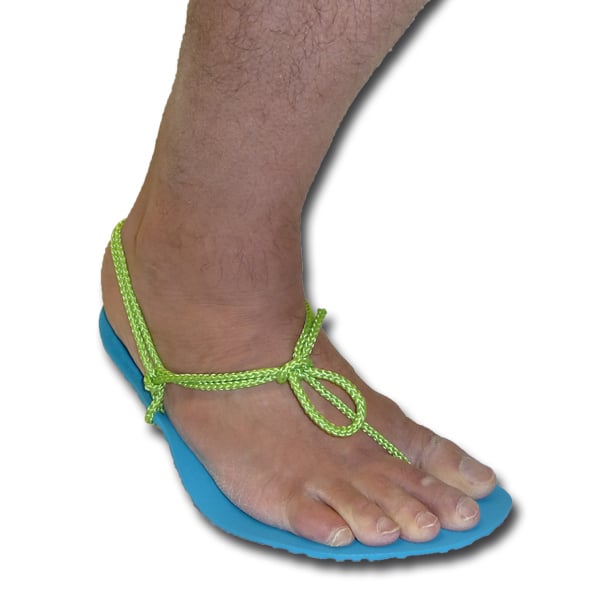
Houston, we have color! I am extremely happy and proud to announce that you can now get Xero Shoes in 4 WAY COOL colors. And to celebrate, you can also save 20% if you order by October 2nd! In addition to our Coal Black, you can now get Mocha Earth, Electric Mint, Boulder Sky, and Hot Salmon. Combine those with our different lace colors... Well, here are a few combinations that you'll see around our office: Lena in her Mocha Earth with matching brown laces and a bunch of Brass Beads. Our office ultra-runner (and customer service manager), Bill, in Electric Mint with Purple laces (he puts 80-100 miles a week on these!) Steven, taking inspiration from an 8 year old customer who was the first one to wear non-matching laces, in Boulder Sky with White laces and a Hand Pendant (on the left) and Hot Salmon with Red laces (right). These new colors come in both Connect 4mm and Contact 6mm styles. And you can get them as kits or custom-made. Click here to order your Xero Shoes Colored Barefoot Sandals

Placeholder Image - Xero Shoes

Dan Lieberman on Running Form

Harvard's Daniel Lieberman is one of the stars in Chris McDougall's book, Born To Run. In the book, Chris describes Dr. Lieberman's anthropological theory that humans ability to run long distances (while maintaining their body temperature) allowed us to chase down animals that, for short distances, are much faster than we are. He also details Lieberman's research into running mechanics and running form, including the famous study that demonstrated how barefoot running puts less force through your joints and can be better/safer for you.Well, thanks to Pete Larson at www.runblogger.com (who turned me onto the following video), and thanks to Tuck at http://yelling-stop.blogspot.com/ (from whom Pete found it), I'm happy to share this video of Dan sharing his top 5 tips for better running.All I would add (and I'm about to release something that describes this) is that "Don't overdo it" isn't a useful message, because the only way you know if you've over-done it, is when you've done too much and it's over! ;-)In other words, better to come up with a plan for what you ARE going to do, rather than make an admonition about what you shouldn't do, since us humans are as bad at following "don't do this" rules as we may be as good at chasing down an antelope.

Placeholder Image - Xero Shoes

See, Barefoot Running is NOT Bad for You

The media is an interesting thing. One day, they love you, the next day they hate you. As long as there's controversy, they're interested... ish. The last time barefoot running made all the news it was when the University of Colorado study (done right up the hill from me) apparently showed that barefoot running was less efficient than running in shoes (see my analysis of that study here). In fact, when that study got published, the media went crazy, practically insisting that this was the death knell for those of us who run unshod. So, I'm not sure what it means that they've basically ignored a new study from Northumbria University that shows the exact opposite! Why are there no crazed headlines about how running without shoes really IS the greatest thing since bread, the slicer, and the sliced bread that comes from intelligently combining the two? Who knows. Who cares. More importantly, check out the info about the study here at ScienceDaily.com In short, if you want the synopsis: Runners used 6% more energy when they wore shoes. Here's the line I like: The results suggest that, by ditching their trainers, athletes new to barefoot running adopt a running style similar to experienced barefoot runners and enjoy an immediate and likely beneficial increase in running economy. Works for me (in fact it DID work for me!)

Placeholder Image - Xero Shoes

Vibrating insoles, bare feet, and balance

The Wall Street Journal online published an article describing the research of James Collins from Harvard. James wondered why people get less steady on their feet as they get older.His conclusion: They get less feedback from the ground and lose the ability to balance.So far so good.His solution: An insole that provides random vibration to stimulate the nerves in the feet.Can anyone here think of another way of doing the same thing, but without all the electronic bells and whistles? Anyone? Beuler? Beuler?If you said, "Take off your shoes!" you win any prize on the second row!If you said "Take off your shoes! And if you don't want to step on unpleasant things, wear Xero Shoes!" you get a prize from the TOP row! ;-)If you think about this, it sheds light on another bit of research on balance and the elderly: Studies have shown that Tai Chi can help elderly people regain their balance. But it's probably not the Tai Chi that's causing the effect (BTW, I have nothing against Tai Chi... I did it and taught it for years). It's the time spent barefoot, FEELING the ground.I hope that someone does a study with Xero Shoes and balance sometime. I'd place a bet on the outcome.The content of this post does not constitute and is not intended to be a substitute for professional medical advice, diagnosis or treatment. Always seek the advice of a physician or other qualified health provider with any questions or concerns you may have about your health or a medical condition.

Placeholder Image - Xero Shoes

Barefoot Running... The Movie!

I know many of you are eagerly waiting for the Born To Run movie (I am, too).Well, until that's out at your local gajillion-plex, check out this trailer of the new barefoot running movie by Michael Sandler and Jessie Lee, authors of Barefoot Running.I'm forever grateful to Michael and Jessie... when I decided to try running barefoot as a way to deal with my persistent running injuries, I was fortunate enough that they were teaching a workshop that very weekend, right in my backyard (metaphorically speaking... it was 3 miles away).Even more, after my first barefoot run, when I said to Michael, "Well, that was interesting, but I'm a sprinter, not a long, slow distance guy," he encouraged me to try it a few more times and, for some reason, I did.Then, Jessie, being a former sprinter herself, added a whole other level of fun when we would take off across some field, leaving the LSD runners in the dust ;-)Oh, and it was Michael saying, "If you had a website for these sandals you're making, I'd put you in our new book," that was the beginning of Xero Shoes!If you watch this trailer and don't want to book a ticket for the workshop where Michael and Jessie take you to all of these amazing locations, then there's something wrong with you (or you already live in Hawaii).I've seen clips from the entire movie and it's really something special. Enjoy.

Placeholder Image - Xero Shoes

How to think like a shoe company

You know the saying "when all you have is a hammer, everything looks like a nail"?Well, it's true for shoe companies, too. When all you have is padding and motion-control, everything looks like it pronates and lands too hard!Check out this video about the "secret" Adidas development center. Especially watch at the 2:10 mark where the "best people in the world" analyze Ben's sprinting gait and conclude:a) That he pronates and heel-strikes (NOTE: He over pronates BECAUSE he heel-strikes since, when you land on your heel, the ankle muscles can't can hold the foot/ankle/lower leg in place).b) The solution: Making a shoe with padding and motion control!Uh...First of all, if you heel strike when you sprint, you are not sprinting! Sprinters do not heel strike. And when you land on your forefoot or midfoot, the entire musculature of the lower leg, ankle, and foot, can be "pre-loaded" and engage when you land.The cure for Ben is to STOP HEEL STRIKING, not get a shoe that lets him continue to run incorrectly. Duh.My next comment falls into the "maybe it's just me" category: Notice how large, spacious and expensive this place is. Ben mentions that Adidas does over a BILLION euros in sales.Look, I'm the last guy to deny any company the right to make money, and I'd love to have a billion dollar company.But am I the only one who sees a direct connection between a massive, pricey research lab and shoes that cost $150-200, and "hi-tech" shirts that cost $100+. This is like a thought I had at the Outdoor Retailer trade show, where some of the bigger companies have booths that easily cost over $1,000,000, "Oh, now I know why they charge so much for their products! They need to support the booth."Honestly, I find it unlikely that the "amazing" research they're doing actually pays for itself. I think it makes them feel good about themselves, and makes naive reporters think, "Oh, wow, they're doing something really special here."I don't doubt for a second that they could drop the price of their shoes to something more reasonable, not waste money on "research" that's iffy at best, and still make the same profit.Again, maybe that's just me.The content of this post does not constitute and is not intended to be a substitute for professional medical advice, diagnosis or treatment. Always seek the advice of a physician or other qualified health provider with any questions or concerns you may have about your health or a medical condition.

Placeholder Image - Xero Shoes

Run in Peace, Micah True

There's no way to adequately thank one of the great inspirations in the running world, Micah True, also known as Caballo Blanco ("White Horse"), who was found dead just hours ago. Micah, arguably the "star" of Christopher McDougall's best seller, Born To Run, went out for a run on Tuesday and did not return. There's no news at this moment about a cause of death.As Micah would often say in signing off, "Run Free!"Run In Peace, Micah.

Placeholder Image - Xero Shoes

University of Colorado Barefoot Running Study

 The media is having an anti-barefoot running field day thanks to a study published by some people right up the street from me at the University of Colorado (BTW, I've been living in Boulder for 19 years and nobody has been able to explain why they call the university CU instead of UC.).Each of the dozens of articles about the study has a distinct flavor of elementary school playground taunting, "Nah, nah, nah, nah, boo, boo… barefoot running isn't good for you!"I mean, check out some of the headlines: Debunking the Barefoot Running Myth - Sydney Morning Herald (barefoot running isn't like bigfoot!) Here's Proof Barefoot Isn't Better -- Running Times (Ha! So there!)It almost feels like the press is enjoying creating a backlash to all the "pro" barefoot articles of the last two years, even though in every barefoot article I've read the media insists on publishing "both sides of the story," and includes some doctor who's never run a meter in bare feet and wouldn't know decent barefoot running form if it ran him over, claiming that running without shoes will hurt you, bring shame on your family, and accelerate the coming apocalypse.So, let's take a deep belly breath or two and have a chat about the study. In fact, let's start by talking about studies, in general:Designing a biomechanics study is not easy. Aside from deciding exactly what you want to explore and the best design of the study itself (how you can test it), finding enough of the right kind of participants is often tricky, if not impossible.It's even more difficult to design a study that isn't artificial in some way. That is, it's showing effects in a lab that may not be relevant in the real world.And, even more, many studies, while interesting, may not be relevant to the broader population. (Whenever someone quotes a study, or even just the habits, of elite marathoners, I respond "Unless you're 5'5" and weigh 105 pounds and run at 13 miles per hour for two hours... WHO CARES what those guys do?)Finally, the way the media picks up a study -- this one or any of the previous barefoot studies -- often adds some spin that isn't in the actual study.All of the issues I just raised are relevant as we take a gander at the CU study. BTW, if you want to see a lively and cogent critical look at the study, you can't go wrong with reading the comments on the New York Times article about it. Frankly, this post probably won't be as lucid as some of the comments there.Okay, let's jump into it… The gist of the study:"In the study, 12 subjects with substantial barefoot running experience ran at 7.5 MPH with a mid-foot strike pattern on a motorized treadmill, both barefoot and in lightweight cushioned shoes (~150 g/shoe, 5.4 oz). In additional trials, they attached small lead strips to each foot/shoe (~150, ~300, ~450 g). For each condition, they measured the subjects’ rates of oxygen consumption and carbon dioxide production as an index of metabolic cost.”And the results:a) For every 100g (3.5oz) (the average weight of a deck of playing cards) added per foot, energy cost increases by approximately 1% whether running barefoot or shod.b) Running barefoot and in lightweight shoes do not significantly differ in energy cost.c) When controlling for shoe/foot mass, running in lightweight shoes requires ~3-4% less energy than running barefoot."Now, let the fun begin. Can you find the "confounds" (the factors in the study that might affect the results, or the interpretation of the results)?I'll start. Let me know if you find more.1) How did they determine that the 12 subjects had "substantial barefoot experience?" Well, the study says, “8 km/week barefoot or in minimal running footwear (e.g. Vibram Five Fingers) for at least 3 months out of the last year.”Does 3 months out of the last 12 really equal "substantial?" I've been barefoot for 3 years, and I'm STILL improving my form.And if that three months was wearing VFFs or minimalist shoes, that counts as "barefoot experience" Uh…As I've commented, and as the American Council on Exercise showed, and as Pete Larsen from www.runblogger.com captured on video: VFFs are not the same as barefoot.Now the researchers did verify that the subjects all ran with a "midfoot or forefoot" landing. I know that Lee Saxby, the spokesman and coach from Vivobarefoot would have an issue with that. He doesn't think midfoot is proper barefoot form (there's some debate about that, but it's besides the point at the moment).2) They ran on a treadmill. Look, I get that testing runners on an actual track is hard and expensive, but running on a treadmill is not the same as running on the ground, end of story. It may give some useful data, but if it walks like a duck and quacks like a duck, but the duck is on a treadmill… hmmm, that analogy isn't quite working, but you know what I mean.I did some high-speed video analysis of my running at the Monfort Human Performance Lab. I hit 21 mph on that treadmill. I can tell you that when I'm on a treadmill, my stride is different than on the track. I overstride so I can "catch" the treadmill belt, for example.3) To simulate a running shoe's weight, the researchers put lead weights on the top surface of the runners' feet. Do you think some small weights pressing down on your foot is different than having that same amount of weight distributed evenly, and mostly under your foot, thanks to the design of the shoe? I do. Does that matter? Could be. Is there a way to check… not easily.4) The runners were at 7.5 miles per hour. That's slow for an elite runner --  about 200 meters in a minute, a quarter mile in 2 minutes, a mile in 8 minutes -- but fast for most casual runners. This raises a few questions:a) How was that pace compared to the runners' usual training pace? b) Does speed make a difference? c) What about turnover, or cadence? Were those controlled and the same when the runners were barefoot vs. shod?Got me. But, suffice it to say, we're seeing the artificial quality of the study.5) Oh, this wasn't mentioned above, but I'll give it to you now: the runners were wearing yoga socks. "“For the duration of the experiment, subjects wore very thin, slip-resistant yoga socks for safety and hygienic purposes.”Hygienic purposes? Uh, some 409 and a paper towel would handle any "hygiene issues." And "safety"? If you read the study, one aspect of "safety" is "avoiding blisters."Boy, where to start on that one? We know that socks does not equal barefoot, and we also know that if you get blisters when you run barefoot, you're doing something wrong. So, this brings us back to number 1 -- how experienced were these runners really?6) The study measured oxygen consumption and carbon dioxide production. Okay, that's a fine way to measure efficiency, based on the idea that using less oxygen and producing less CO2 means you're using less effort, and that equals being more efficient.But here's a question: So what?For one: does using less energy equate to faster times? It seems like it might, but that's not a given.Does the amount of extra energy being used by *some* of the barefoot runners have any relevance to the average runner? Someone for whom 7.5 mph is too fast… or even too slow?7) Oh, here's a favorite. The runners in the study wore an ultra-lighweight racing flat. Most runners wouldn't wear those. And most runners with no barefoot experience wouldn't find those any friendlier than being shoe-free.8) One other thing: A hallmark of the scientific method is reproducibility. Just because one lab gets a result, that doesn't mean the question is resolved. When a study is reproduced in independent labs and the same (or very similar) result is obtained... then you know you've got something.What if the study is correct, though? What if barefoot running is less efficient than shod running?The only answer I can come up with is: Who cares?I don't mean that it's not important to know. I mean, literally, who should care?If you never race, you'll never notice any difference in efficiency (assuming, again that "decreased efficiency" = slower times).Besides, there are MANY other reasons to run with bare feet than the idea that it's more efficient... many that have barely been touched on (Dr. Michael Merzenich and I have had some interesting chats about how being barefoot could help the elderly in various ways). Personally, I didn't make the switch for efficiency's sake. In fact,  for me, as a sprinter, I know I'm more effective in spikes than barefoot. I switched because it helped me correct some form problems, eliminated injuries I was getting, turned running from a chore into an enthralling discovery, and, more importantly... WAS FUN.Don't get me wrong, I'm thrilled that my Boulder neighbors are researching barefoot running. And while this is the first published study, I know they have more coming and I'm looking forward to those.And I'm certainly not blaming them for how the media is handling the story.My only interest is the continued exploration, conversation, and understanding of efficient movement, running for speed and/or distance, and the ways of teaching and exploring barefoot running (and walking and hiking).No one study can perfectly address all of the open questions. But the almost combative attitude where everyone wants to jump on some one-sided "We're better!" bandwagon certainly doesn't help.Suffice it to say, this study is not the death knell of barefoot running that many media outlets are portraying it to be (because, you know, controversy is more important than truth if you're trying to sell papers).Now, if you'll pardon me, I have to burn off some of my frustration by putting on some yoga socks and minimalist shoes and going for a barefoot run.p.s. (added on 4/4/2012):I just realized that the conclusion of the study was WAY off base!Here's whyThe researchers think that the improved efficiency of the shoes came from the PADDING absorbing some of the stress that the muscles have to handle when you're barefoot.In other words, the ENTIRE efficiency effect could be ALL about the padding and have nothing to do with weight. The weight issue would only be valid if they tested multiple shoes of the same weight with different types of padded outsoles and got the same results.The content of this post does not constitute and is not intended to be a substitute for professional medical advice, diagnosis or treatment. Always seek the advice of a physician or other qualified health provider with any questions or concerns you may have about your health or a medical condition.